How to make Southeast Asian ceviche with avocado and tortilla chips, a Peruvian classic with a Mexican-Thai fusion twist
- Use lime juice, or even better, calamansi juice to cure the seafood – it takes around two hours
- The tortilla chips give crunch, while chilli, fish sauce and coriander add a flavour punch

Using salt or acidic ingredients to briefly cure raw seafood isn’t unique to South America, although ceviche – which comes in many versions – is probably the one most people think of. Hawaii has its poke, the Philippines has kinilaw, the Nordic countries have gravlax, and Japan, of course, has sushi.
Southeast Asian ceviche with avocado and tortilla chips
This fusion version of ceviche is “cooked” with fresh Thai lime juice, although if you have calamansi juice, use that instead. Of course, the seafood is not actually cooked, but if you leave it marinating long enough, the texture and colour change so that it looks cooked – the scallops turn from opaque to off-white while the shrimp become white/pink.
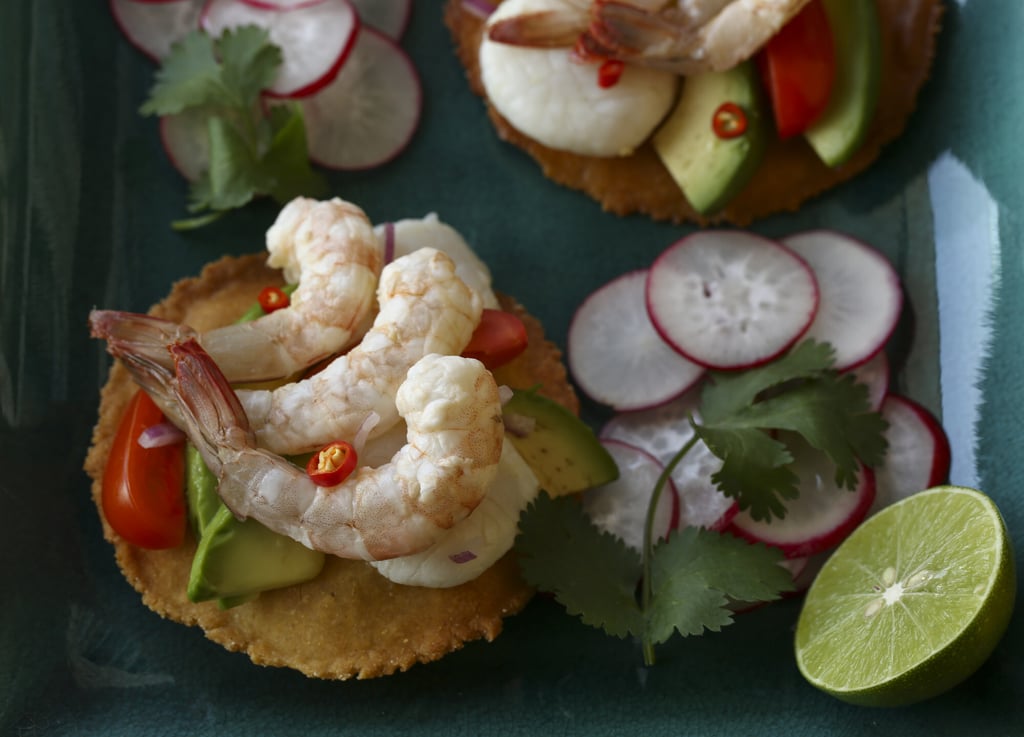
In addition to the lime juice, the ceviche is flavoured with fish sauce, garlic, shallot, bird’s-eye chilli and fresh coriander. It is then served with avocado (the richness of which balances the acidity), radish and tortilla chips, which give a nice crunch.
As with other types of ceviche, you can eat it while the seafood is still almost raw (marinated for two hours or less), or leave it in the fridge for longer, so the texture becomes firmer.
Buy the freshest seafood you can find from a reputable supplier. Frozen scallops are fine as long as they haven’t been injected with a preservative. The flash-frozen ones from Japan tend to be good, although they are expensive. If using fresh scallops, trim off the roe or coral, and use only the scallop flesh. The coral and roe are delicious when sautéed in butter and seasoned with salt and pepper.
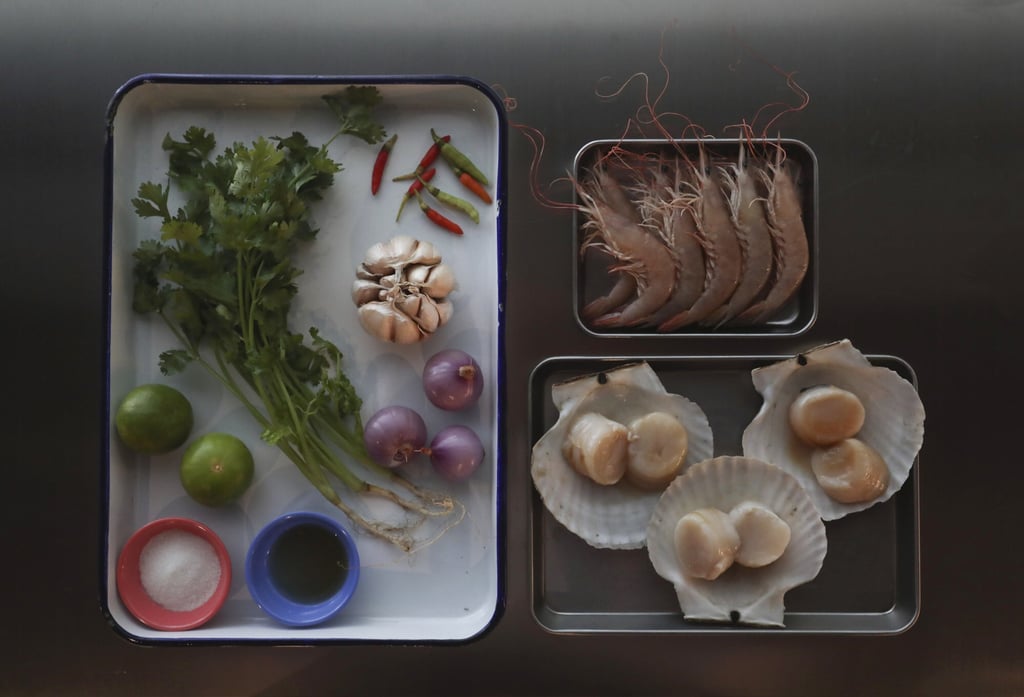
20-24 fresh shrimp, about 5cm long (without the head)