Cod cooked Cézanne’s way, Monet’s Yorkshire pudding and bouillabaisse – a dish he served Renoir – and other recipes inspired by the Impressionist painter’s garden at Giverny
- The Impressionist artist was a lover of food, and grew the flowers and produce featured in his still-life paintings in his large garden at Giverny, France
- A cookbook inspired by Monet, his cooking journals and his friends includes Cézanne’s recipe for cod, and a Frenchified English dish for which he had a passion

Not knowing much about the personal life of famous artists, I wasn’t aware that Claude Monet was a food lover who kept a 1-hectare (2.5-acre) garden near his home in the village of Giverny, in Normandy, France. I guess I never thought about what happened to the quinces, melons, grapes and other fruit after the artist had finished painting them – they went down his throat, it seems!
Authors Aileen Bordman and Derek Fell delve into the artist’s love of food in their book Monet’s Palate Cookbook – The Artist & His Kitchen Garden at Giverny (2015). Monet wasn’t always able to indulge in fine food, the authors write in the introduction.
“Considered by many to be the father of Impressionism, Claude Monet was one of a group of avant-garde painters who rebelled against traditional concepts of artistic merit. Until the invention of photography, a work of art was judged by its realism. When artists realised that it was impossible to be more realistic than a photograph, they sought new ways of artistic expression […]
“Because this new style of painting was so different from classical art, and represented what an artist saw with his inner eye, it took a long time for the public to appreciate its value. Until his mid-40s, Monet struggled to earn a living. Only when his work began to sell to American collectors was he able to purchase his own home in Giverny and live a largely self-sufficient lifestyle.
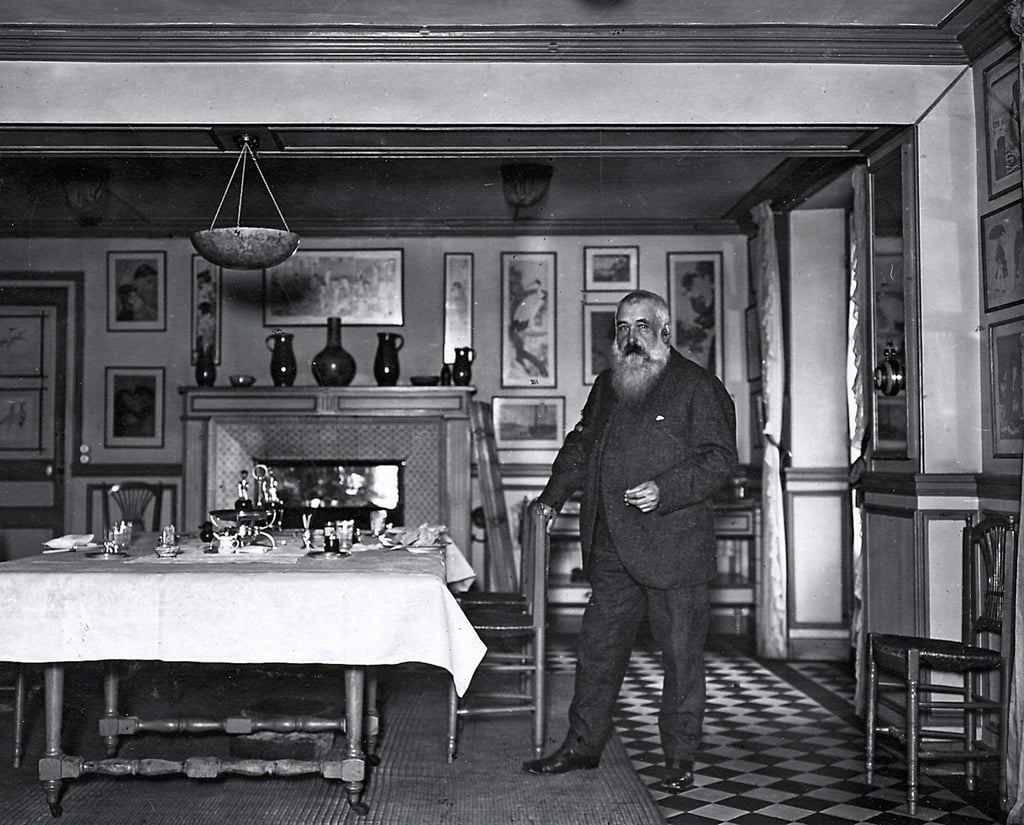
“Almost every franc that he earned, after taking care of his family’s welfare, he would spend on the freshest ingredients for meals and improving the interior and exterior of his house. Originally a farmhouse with a cider press and called Le Pressoir, it became better known as the ‘Pink House’ for the brick dust used to colour its stucco facade.