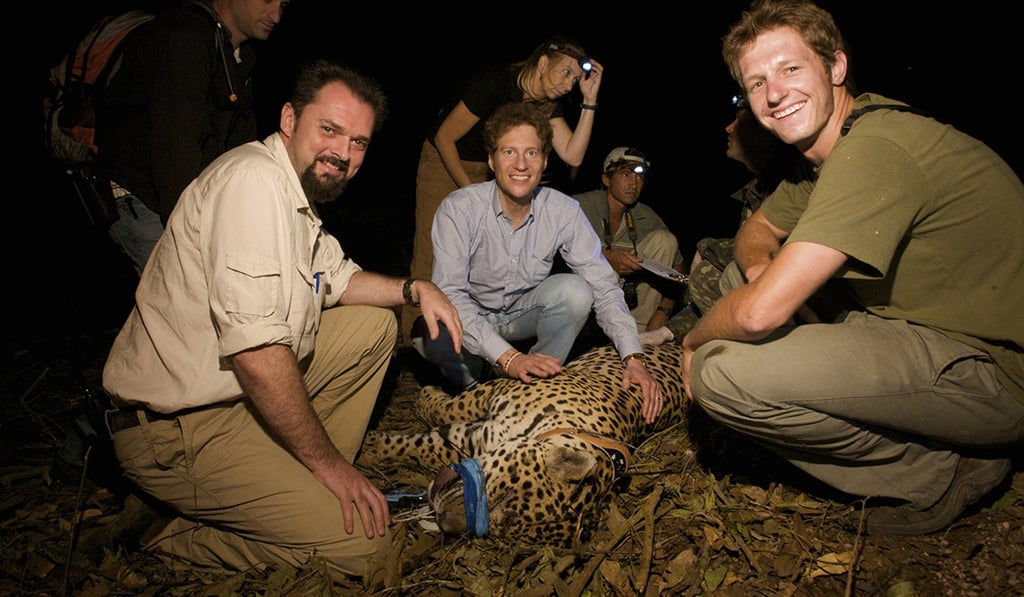
Man with the most Rembrandts is wooing China to save big cats
American billionaire Thomas Kaplan, who made his fortune by betting on precious metals, tells us how he how he is using art to save big cats and humanity – starting in China

Thomas Kaplan’s signature three-piece suits spell taste and money and a buttoned-up approach to life. By comparison, the American mining tycoon’s spending sprees appear to border on the impetuous.
From 2003 to 2008, he bought 17th-century Dutch oil paintings at the rate of one a week, including works by his favourite artist, Rembrandt van Rijn. The New York-based billionaire went from having not one “old master” – a term for major European artists active before the early 19th century – to owning, with his wife, Daphne, the world’s biggest private collection of works from what is often referred to as the “golden age” of Dutch art.
The Kaplans do not have their own exhibition space and the best of the 250 pieces in their Leiden Collection – named after the Dutch town in which Rembrandt was born, in 1606 – are almost always on loan. Until recently, they chose not to promote the fact that they are the owners of significant works by Rembrandt, Peter Paul Rubens, Johannes Vermeer … names that belong to the celestial realm of art history.
“We have been lending to about 40 museums around the world,” Thomas Kaplan tells Post Magazine. “We used to do that anonymously and we liked it that way. Owning doesn’t confer respectability. We had no desire for the social cachet that would come with being seen as collectors.”
But the couple have decided a low-key approach no longer strikes the right note. In Shanghai – the city where collectors often live by the motto “if you’ve got it, flaunt it” – Kaplan explains that he is taking his paintings around the world to spread the word about his other passions: saving big cats and using art to promote a sense of cultural openness and shared humanity.