Yemen refugees’ arrival in Jeju splits South Korean resort island
Arrivals from the Middle East have sparked a debate about the country’s role in accepting asylum seekers

Hamza al-Odaini had two paths before him after he graduated from secondary school in Yemen: be forced to pick up a gun and fight in the civil war, now in its fourth year, or flee the country. In the end, his mother decided for him, sending the 17-year-old on a journey through Oman and Malaysia, before he landed on the South Korean resort island of Jeju. He hoped to study to become an engineer, but in the two months since he arrived, there has been a rude awakening.
“It was really hard to leave, but it’s better than staying and being captured and forced to fight,” Odaini says. “When I had to accept I am going to be a refugee, I thought that meant I would have a better life, I’ll be able to go to university and I’ll get financial support. But this is totally different than what I thought.”
The arrival of Odaini and more than 550 other Yemeni refugees has sparked intense debate in South Korea over the country’s role in accepting asylum seekers, with the population split between calls for compassion and immediate expulsion. Much of the anti-refugee rhetoric has taken on Islamophobic overtones, and detractors point to the European refugee crisis as a lesson of the woes of unchecked migration.
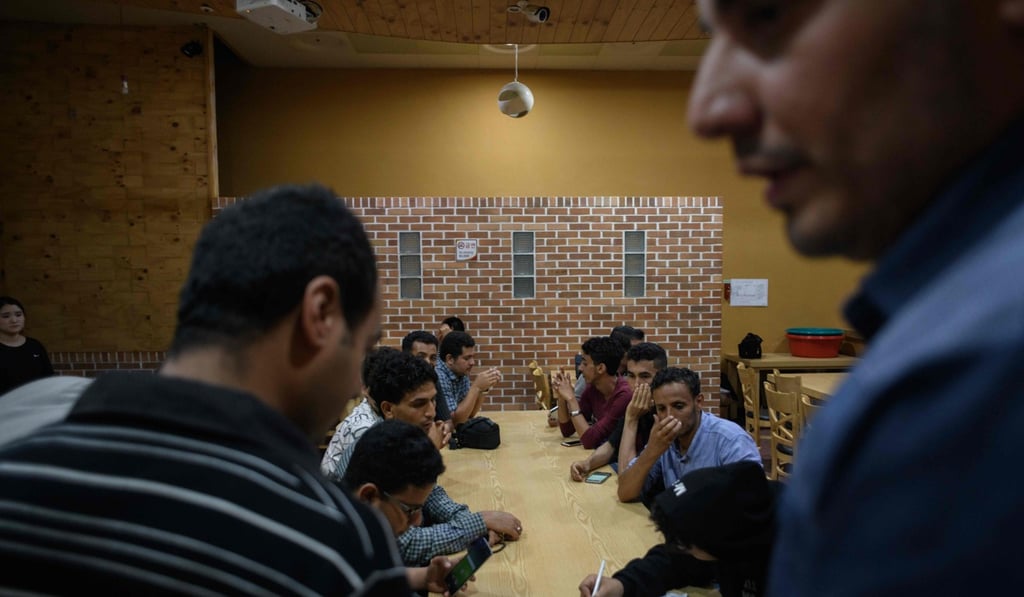
Amid the influx of asylum seekers, in June the government removed Yemen from the list of countries allowed visa-free access to Jeju. Immigration authorities have barred the refugees from travelling to mainland South Korea, and while they are allowed to work, employment has been restricted to fishing, fish farms and restaurant work. Many remain unemployed.
While most of the Yemenis who arrived are single men, Jamal Al-Nasiri made the trip with his wife and five daughters. They have been taken in by a family, and while the children are unable to enrol in school, local volunteers come to the house to teach them Korean.