Germany’s China City: how Duisburg became Xi Jinping’s gateway to Europe
Some 80 per cent of trains from China make the world’s largest inland port their first European stop

For much of the 20th century, the city of Duisburg in Germany’s industrial west was a steel-and-coal town whose chimneys cloaked the skies in smoke. And yet there is something about this soot-stained spot in the Ruhr valley that seems to encourage a particularly clear-sighted view of the rest of the world.
In 1585, it was in Duisburg that Flemish cartographer Gerardus Mercator published a book of maps of European countries – the first ever “atlas” to carry that name. And it was here that Mercator first presented his new world map, the “Mercator projection”, that was so revolutionary for maritime navigators keen to steer merchant vessels across the high seas in the straightest possible line.
If, in 2018, Duisburg is slowly rediscovering its cosmopolitan past, it is not just because four centuries after Mercator, traders are still trying to find the most direct route from A to B. As the threat of United States President Donald Trump’s tariffs and Brexit-related trade barriers is driving wedges between the European Union and the Anglosphere, this former rust-belt town allows one to see in real time how Germany and China are intensifying their economic ties.
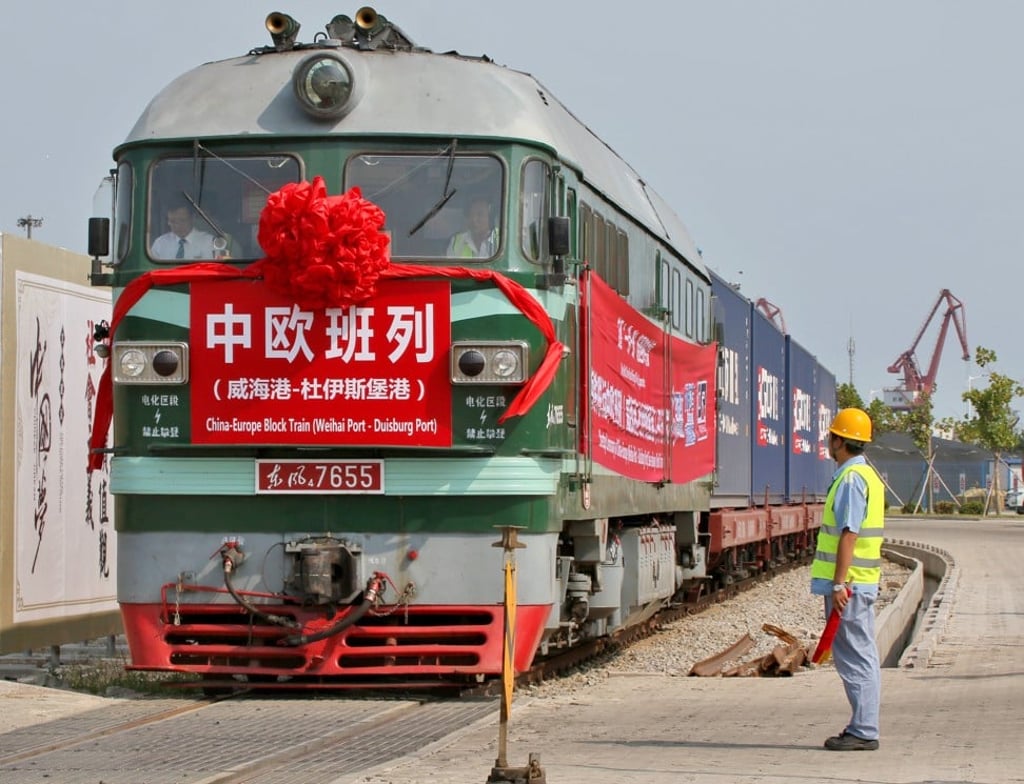
In Duisburg’s port, where train tracks run straight to the edge of the Rhine river, goods are loaded straight on to ships, stored for further dispatch in one of several football pitch-sized storage units, or sent on by train or truck to Greece, Spain or Britain.
Duisburg was already regarded as the world’s largest inland port. But thanks to the Belt and Road infrastructure project – a revival of the Silk Road route that Mercator had read about in the travelogues of Marco Polo, this time subsidised with billions of dollars by China – the port is fast becoming Europe’s central logistics hub. About 80 per cent of trains from China now make it their first European stop, with most using the northern silk road route via Khorgos on the China-Kazakhstan border and the Russian capital, Moscow.