Russian shipwreck and a South Korean crypto scam – how investors were fooled by promise of US$133 billion sunken treasure
- When the wreck of the Dmitrii Donskoi was supposedly discovered by a South Korean company, investors jumped aboard to get a share of US$133 billion of gold. The only problem? It has never materialised

As Captain Ivan Lebedev stood on the bridge of the armoured cruiser Dmitrii Donskoi on May 29, 1905, and gave the order for his badly damaged ship to be scuttled, he could have had no idea of the financial scandal his command would cause some 113 years later.
The warship had been damaged by Japanese torpedo boats and destroyers in the Battle of Tsushima, which devastated the Russian fleet and effectively handed victory to Japan in the Russo-Japanese war. The conflict was waged over rival imperial ambitions in the Chinese-controlled territories of Manchuria and coastal Korea. Attempting to head north for Vladivostok after the battle, Lebedev intended to beach his crippled warship on the small Korean island of Ulleungdo but then decided to cast anchor, ferry his ship’s company ashore in small boats and sink her in the deep water, about 2km from the rugged coastline.
The Dmitrii Donskoi is now at the centre of a major treasure-hunting controversy being investigated by police in South Korea. The case confirms that, when it comes to investing in the salvaging of shipwrecks filled with lost treasure, the gullibility of some people can run as deep as any ocean.
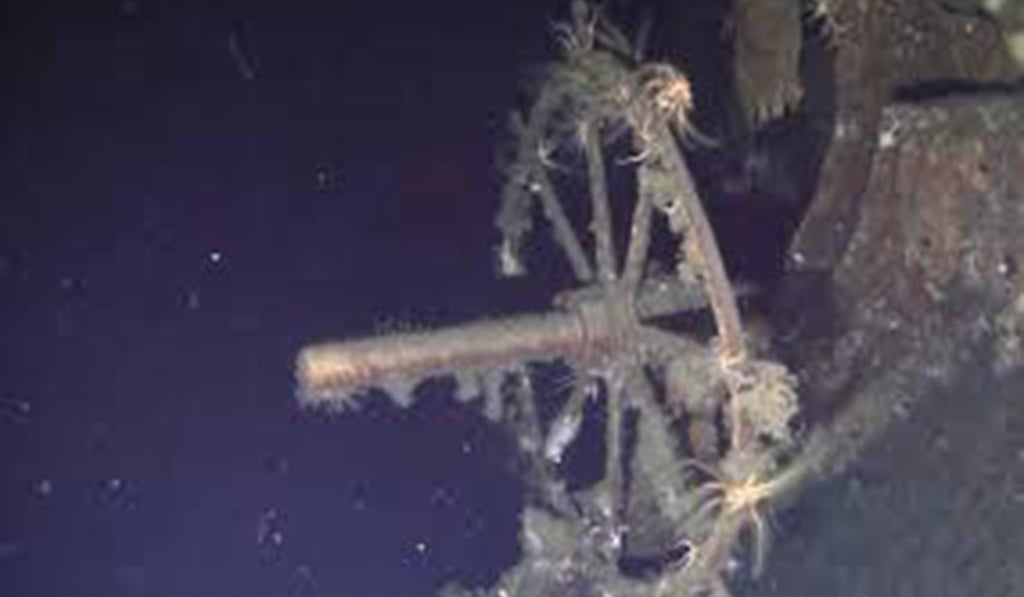
At a press conference held by the Shinil Group in Seoul on July 26, underwater video footage was shown of Captain Lebedev’s ship. Shinil’s senior management claimed the company had discovered the wreck in 434 metres of water, off the coast of Ulleungdo. The company’s chief executive, Choe Yong-seok, described several tightly lashed boxes within the ship that, he said, appeared to carry “meaningful items”.
Choe added that Russian archive documents indicated they contained gold – and lots of it. Korean media reported rumours of gold bullion and coins estimated to be worth in the region of US$133 billion. Video stills provided to journalists showed remarkably clear images of the ship’s nameplate, illuminated in the gloomy depths, and the possibility was raised that the cargo was the reason Lebedev was so reluctant to beach his stricken vessel.
Korean media reports say Shinil convinced 2,600 investors to part with a small fortune in a cryptocurrency scam linked to the promised recovery of the gold. Police have frozen Shinil assets worth 2.4 billion won (US$2.1 million) and imposed a travel ban on 21 people involved in their investigation.