Christmas rush ideal cover for wildlife traffickers
- Difficult-to-police small packages now preferred to larger shipments
- Shipping industry, postal services overwhelmed in online-retail era

Wrapped in plastic bags marked with case numbers, the remains of elephants, bears, mountain lions, polar foxes and crocodiles are neatly stored on grey metal shelves at Frankfurt Airport’s International Postal Centre. “Confiscated,” reads a sign in German, in the fenced-in corner of the nondescript warehouse. It’s an unworthy last resting place for some of the world’s most enigmatic animals – or at least the parts of them that have been turned into rugs, decorative statues, jackets and wallets.
Under usual circumstances, December isn’t a good time to visit the centre. This is peak season for international mail, the most hectic time of year, when delivery services and logistics companies handle twice the usual volume due to Christmas deliveries. But in between shifts, during a few minutes of peace and quiet when the conveyor belts have been halted and X-ray scanners switched off, Marcus Redanz devotes some time to showing me a selection of the wildlife and related products his team has detected in packages bound for German addresses.
“If I’m a criminal, then it would make sense to try and smuggle wildlife now,” says the customs inspector.
The vast increase in deliveries over the Christmas period represents a prime opportunity for wildlife smugglers, who anticipate fewer interceptions while delivery services, post offices and inspectors such as Redanz are overwhelmed.
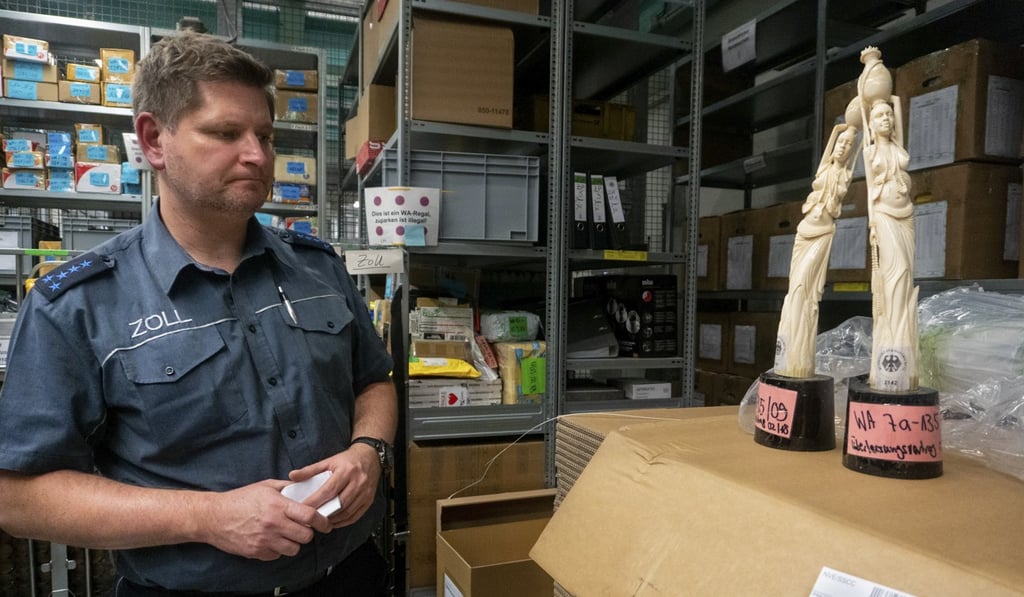
If we are among the last generations to share the planet with wild tigers and elephants, it will be largely due to their commercial value. Criminal networks have turned the trade in protected and endangered species into the world’s fourth largest black market, worth an estimated US$23 billion each year. And it would be a mistake to assume that the trade flows only in one direction, from Africa to Asia.
There’s been an increase in contraband sent in the mail from Asia to Europe, says Redanz. Last year, his team seized a polar fox jacket sent from China, for example, and spiders, lizards and geckos from countries such as Thailand are occasional arrivals.