Chengdu is blossoming as China's ‘park city’, but its residents pay the price of beautification
- Urban planners hail the approach to environmental protection adopted by the capital of western Sichuan province
- But mass demolitions and relocations have made the plans for urban renewal unpopular with some

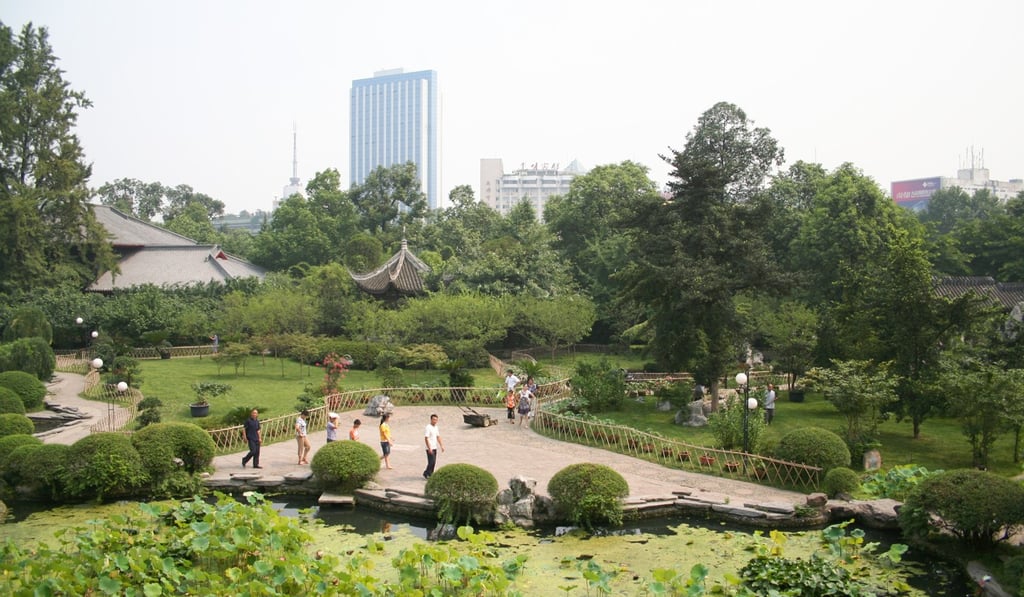
“The goal is that every 300 metres you see green,” says Chen Lan, an expert in urban design and planning at Sichuan University, in Chengdu. “You open a window, you see green, you see a park …”
With its mild weather, tea-houses, quiet leafy streets and internationally known food, Chengdu, in southwest China, has long been rated one of the country’s most liveable cities.
For much of its 2,000-year history as an administrative and agricultural capital surrounded by good land, Chengdu thrived in relative isolation. Over the last two decades, though, it has experienced a burst of rapid growth, fuelled by Beijing’s “Go West” policy encouraging development in interior cities.
In 1998, the city was home to 4.2 million people, according to United Nations estimates. With migrants pouring in from other parts of the province, that figure is now 8.8 million, and the latest UN forecasts predict more than 10 million will live in the urban agglomeration by 2026. Official Chinese data, which tends to include rural areas too, puts the current population at 16 million.
To deal with that growth, Chengdu city planners have made environmental protection a focus. Some liken the programme to England’s garden city movement, which emerged in the 1890s to counteract urban crowding and pollution.
But Chengdu’s urban renewal campaigns, like those of many Chinese cities, have resulted in mass demolitions and relocations – and critics say these projects are more about local officials inflating economic statics, impressing Beijing to climb up the party ladder, and creating a pretext for transferring public funds into private hands.