International House: how an anonymous Chinese student sparked a century of cultural exchanges
- A chance encounter outside a Columbia University library in New York planted seed for global movement celebrating multiculturalism
- Alumni of the worldwide academic accommodation initiative include architect I.M. Pei and Nigerian author Chinua Achebe
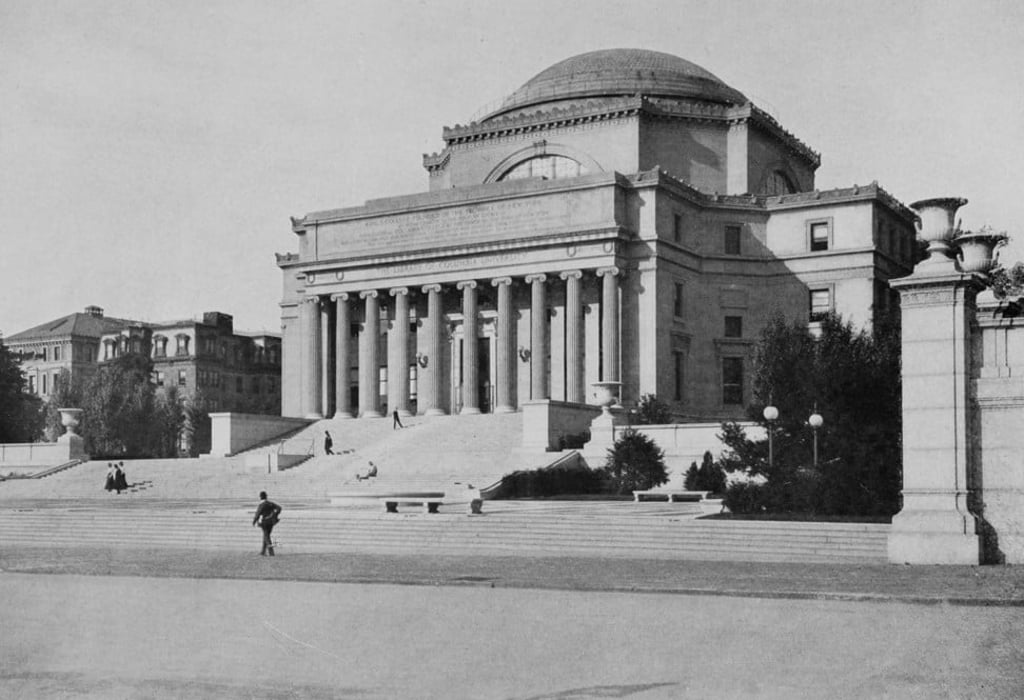
That morning in the autumn of 1909 was frosty, an early hint of the bitter New York winter to come. The young Chinese student who’d just left Columbia University’s Low Memorial Library and was walking down its impressive front steps must have felt the chill. He was a long way from home. When a passing American cheerfully greeted him (“Good morning!”), he stopped. The American, being of a curious mind, turned back to find out why.
“I’ve been in New York three weeks,” the student said. “And you are the first person who’s spoken to me.”
The passer-by was a 26-year-old graduate engineer from New York state called Harry Edmonds. A few years earlier, he’d been offered a job at what was then called Canton Christian College and is now Lingnan University, in Guangzhou. He hadn’t taken the position and maybe a memory of that opportunity prompted the friendly impulse. Or maybe he was just someone who recognised loneliness in a crowd.
Edmonds apologised to the student. He explained that New Yorkers tended to speak only to people they knew. The pair exchanged names and parted. Passing behind the library Edmonds realised, as he put it in an oral history, that “something extraordinary” had happened. He felt it was a tragedy that his city had ignored “a fellow who had come from the other side of the world, China, to study in America”. He went back to find him but he’d vanished – forever, as it turns out. Edmonds didn’t record his name.
The encounter on the Low steps lasted a few minutes. When Edmonds told his wife, Florence, she wanted further action. He did some research. There were several hundred foreign students studying in New York and the Edmondses began inviting small groups of them over for Sunday tea. Eating cake in front of the fireplace, he said, “their national identity sort of dissolved, they were just friendly, jovial, talkative students”.
Out of those teas grew Sunday suppers in Columbia’s chaplaincy at Earl Hall. In 1912, Edmonds and Bayard Dodge, son of philanthropist Cleveland H. Dodge (the family money came from mining), founded the Intercollegiate Cosmopolitan Club, which was affiliated with the Young Men’s Christian Association (YMCA).