Hong Kong air pollution and the deadly impact of shipping and cruise industries
- A single cruise liner berthed at a passenger terminal can emit as much sulphur dioxide as 25,000 diesel buses
- As the waters of the Greater Bay Area get ever busier, is enough being done to clean the emissions of ocean-going vessels?

At weekends, parents push babies in strollers and take family photographs in the attractive roof garden that crowns Hong Kong’s Kai Tak Cruise Terminal, seemingly oblivious to the smoke belching from whichever ocean liner happens to be berthed alongside.
“It’s rare to have such a nice big space,” says a young mother from West Kowloon, as she enjoys a stroll with her partner and son.
Behind her, a plume of filthy rust-coloured smoke belches from the exhaust funnel of the 335-metre cruise liner World Dream; smoke full of sulphur dioxide (SO2), nitrogen oxides (NOx) and particulate matter (PM).
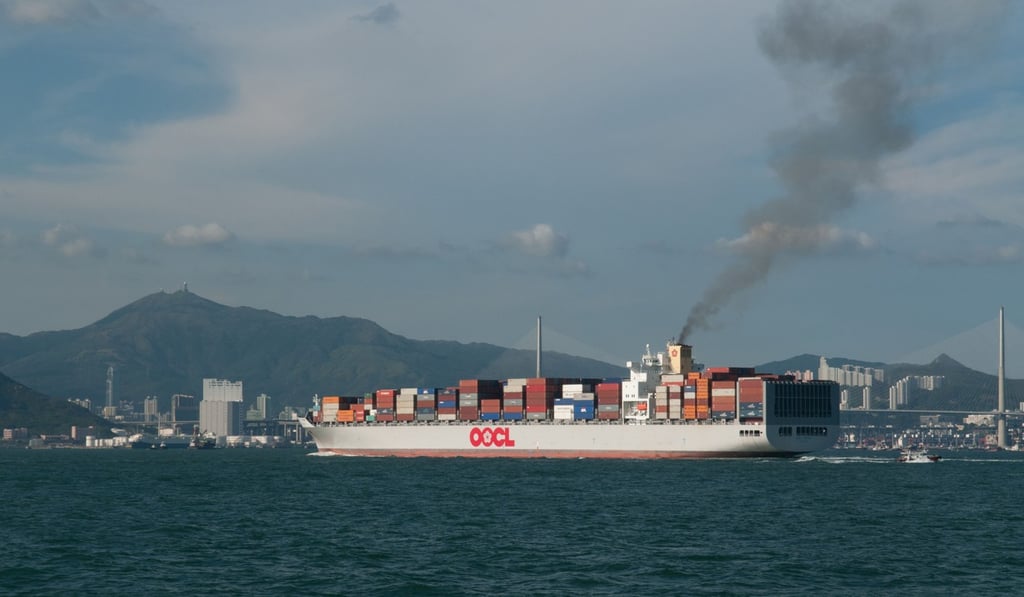
While idling, a cruise liner can emit as much SO2 as would 25,000 local diesel buses, estimates Martin Cresswell, technical director of the Hong Kong Shipowners Association. That’s almost five times the amount of SO2 emitted by Hong Kong’s entire franchised bus fleet (5,422 vehicles) concentrated on one spot, less than 100 metres from where excited toddlers chase each other among well-manicured flower beds, inhaling deeply as they charge around.
SO2 can cause respiratory problems such as bronchitis and can irritate the nose, throat and lungs. It may cause coughing, wheezing, phlegm and asthma attacks. According to the government’s Centre for Health Protection, not only is there a “strong association” between high pollution and premature deaths due to respiratory and cardiovascular diseases, exposure to diesel-engine exhaust – most shipping runs on diesel – increases the risk of cancer. In June 2012, the International Agency for Research on Cancer, under the World Health Organisation (WHO), reclassified diesel-engine exhaust as Group 1, “carcinogenic to humans”.