Maggots, the future of food: high in protein with a small carbon footprint, the only issue is the cringe factor
- The black soldier fly larva’s can transform nearly any kind of organic waste into high-quality protein
- The UN is encouraging governments and businesses to turn to insects to address the planet’s nutrition needs

It may be hard to understand the appeal of plunging your hand into a pile of writhing maggots. But the sensation is uniquely tactile, not at all unpleasant, as thousands of soft, plump grubs, each the size of a grain of rice, wriggle against your skin, tiny mouthparts gently poking your flesh.
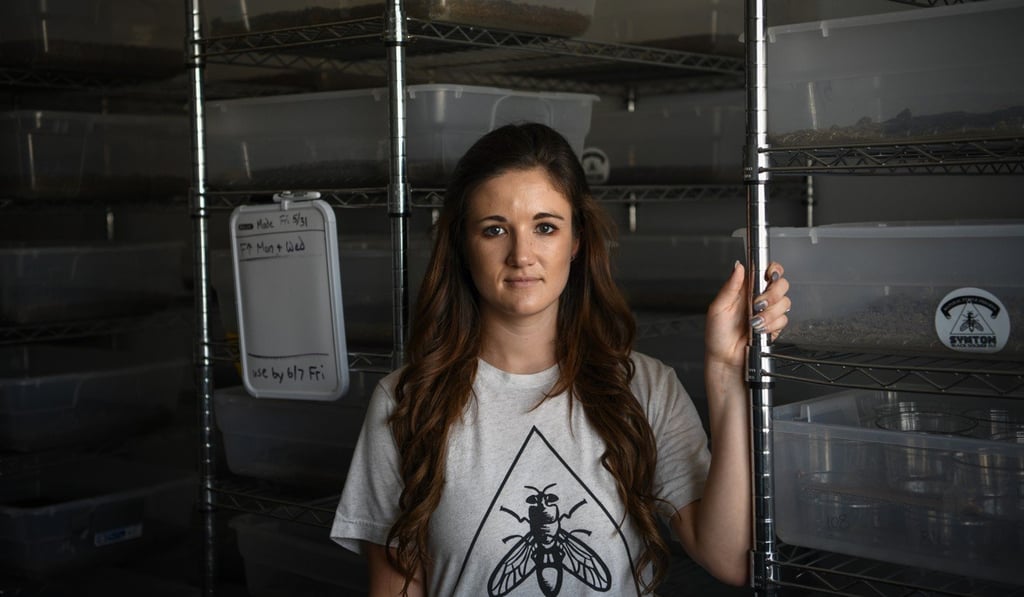
For Lauren Taranow and her employees, it’s just another day at work.
Taranow is the president of Symton BSF, where the larvae of black soldier flies are harvested and sold as food for exotic pets such as lizards, birds, even hedgehogs. Her “maggot farm”, as she styles it, is part of a burgeoning industry, one with the potential to revolutionise the way we feed the world. That’s because of the black soldier fly larva’s remarkable ability to transform nearly any kind of organic waste – cafeteria refuse, manure, even toxic algae – into high-quality protein, all while leaving a smaller carbon footprint than it found.
In one year, a single acre of black soldier fly larvae can produce more protein than 3,000 acres of cattle or 130 acres of soybeans. Such yields, combined with the need to find cheap, reliable protein for a global population projected to jump 30 per cent, to 9.8 billion, by 2050, present a big opportunity for the black soldier fly. The United Nations, which already warns that animal-rich diets cannot stretch that far long term, is encouraging governments and businesses to turn to insects to fulfil the planet’s protein needs.
People who’ve seen what black soldier fly larvae can do often speak of them in evangelical tones. Jeff Tomberlin, a professor of entomology at Texas A&M University, says the bug industry could “save lives, stabilise economies, create jobs and protect the environment”.
“There’s no reason why we shouldn’t be doing this at some scale throughout the world,” he says.