Kim Jong-un’s secret weapons: his wife, his sister and ‘Pyonghattan’ millennials
The North Korean leader has succeeded in making his two ‘first’ women the friendly faces of the regime

North Korea used to be a hermit kingdom, where everyone was equally poor. Everyone, that is, except for the ruling Kim family. But all that has changed since Kim Jong-un took over the dictatorship in 2011, at the preposterously young age of 27.
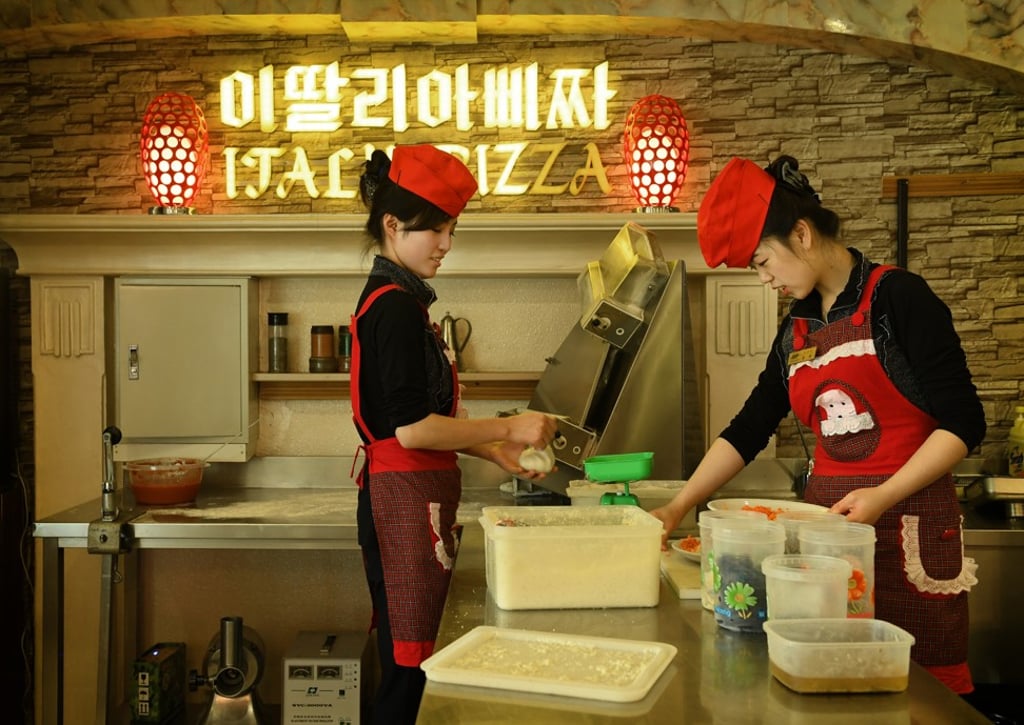
He has set out to recreate for them the privileged lifestyle he inhabited during his formative years at school in Switzerland and travelling around Europe. Today in North Korea there are things you would never expect to see – Western restaurants, sushi bars, German pubs selling craft beer and sausages, amusement parks with roller coasters and other gut-churning rides, and rollerblading rinks by the river. There are taxis where the meter starts at US$1 – a big chunk of the average US$10 monthly wage.
Over wood-fired pizza at the imaginatively named Italian Restaurant in the capital Pyongyang, a North Korean official told me that the Respected Leader wanted his people to be able to enjoy food from all over the world. Today, Kim Jong-un’s cabal can shoot pool and sing karaoke in “Pyonghattan”, the cosmopolitan capital within a capital. They can take yoga classes and drink cappuccinos. They wear fast fashion from H&M and Zara, brought in from China. They swing Dior or Gucci handbags. “Some are fake, but some are real,” says Lee So-hyun, who, along with her brother, has escaped from the regime and is now living a comfortable life outside Washington. She emanates privilege and poise even in America.
Lee is a few years younger than Kim and was once part of North Korea’s elite 0.1 per cent. She lived the good life in Pyonghattan, the daughter of an official involved in raising money for the Kim coffers. She was one of the millennials I met while I was trying to figure out how Kim had defied the odds to become, and more puzzlingly remain, the third-generation leader of the world’s most totalitarian regime.
I had become obsessed with North Korea after being posted to South Korea as a correspondent for The Financial Times in 2004, and my unanswered questions had only mounted with the ascension of Kim Jong-un.