Vietnamese refugees vs the Ku Klux Klan: how racism rattled the Texas town of Seadrift
- The 1979 death of a white fisherman at the hands of a Vietnamese immigrant ignited long-simmering racial tensions
- The events leading up to the tragedy and its fallout are recounted in a new documentary
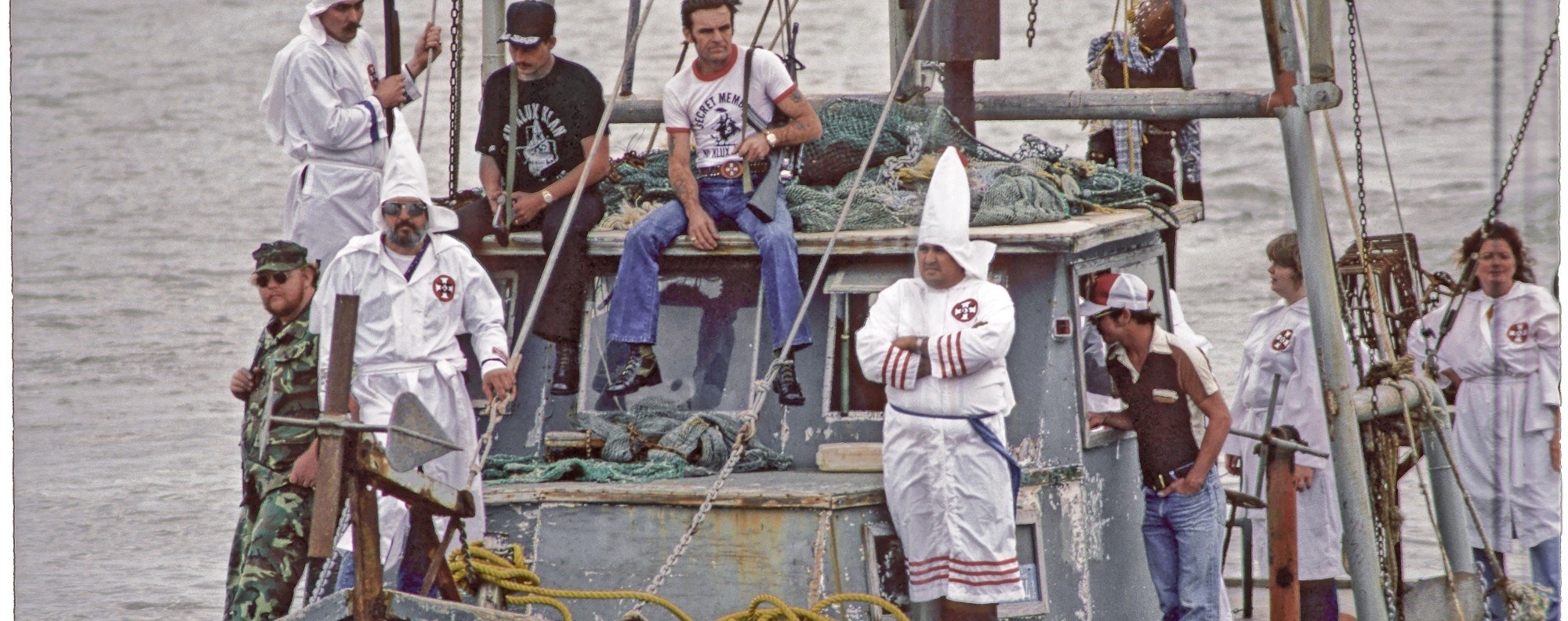
On the night of August 3, 1979, a shot rang out on the docks of Seadrift, Texas, and 35-year-old crabber Billy Joe Aplin lay dying near the boat ramp.
His death shocked the small American town and transfixed the nation, but nobody who remembers that time can honestly say they were surprised. In the months before the shooting, tension had been building. Crabbing and shrimping were always the talk of Seadrift, but now the usual fishing stories took on a darker cast. Fishermen talked not of their catch but of their cut lines and missing traps, of Vietnamese fishermen brandishing their machetes.
In their homes across town, Seadrift’s Vietnamese community was scared. They complained about their vandalised boats, their destroyed crab traps, and whispered about the white fishermen with their taunts and their shotguns. But now Aplin was dead and both sides of the town – more divided than ever – hunkered down and turned even more inward, worrying for their families’ safety, and grateful for their guns.
Even then it seemed fated, that those dark days were building to something terrible: not just the three children left fatherless, but the firebombings that would come, the hooded Ku Klux Klan members marching through small towns lining the sea, the mass exodus of the vibrant Vietnamese diaspora along the Texas coast.
“It just exploded,” says Irwin Tang, editor and co-author of Asian Texans: Our Histories and Our Lives (2007). “It was probably the closest thing that we’ve actually had to something like a modern race war in Texas.”
Today, most Americans don’t even remember Seadrift, but at the time, it was everywhere. Revered CBS anchor Walter Cronkite worried about the spectre of race violence along the Gulf coast on the evening news, Time magazine sent a correspondent south to cover the growing hostility, and the national papers reported on disagreements between fishermen using the language of war.