Controversial Chinese author Chen Xiwo grew up during the Cultural Revolution, but he calls these ‘absurd times’
His work has been censored in mainland China for its graphic descriptions of sex and violence that represent the corruption of the world he sees around him

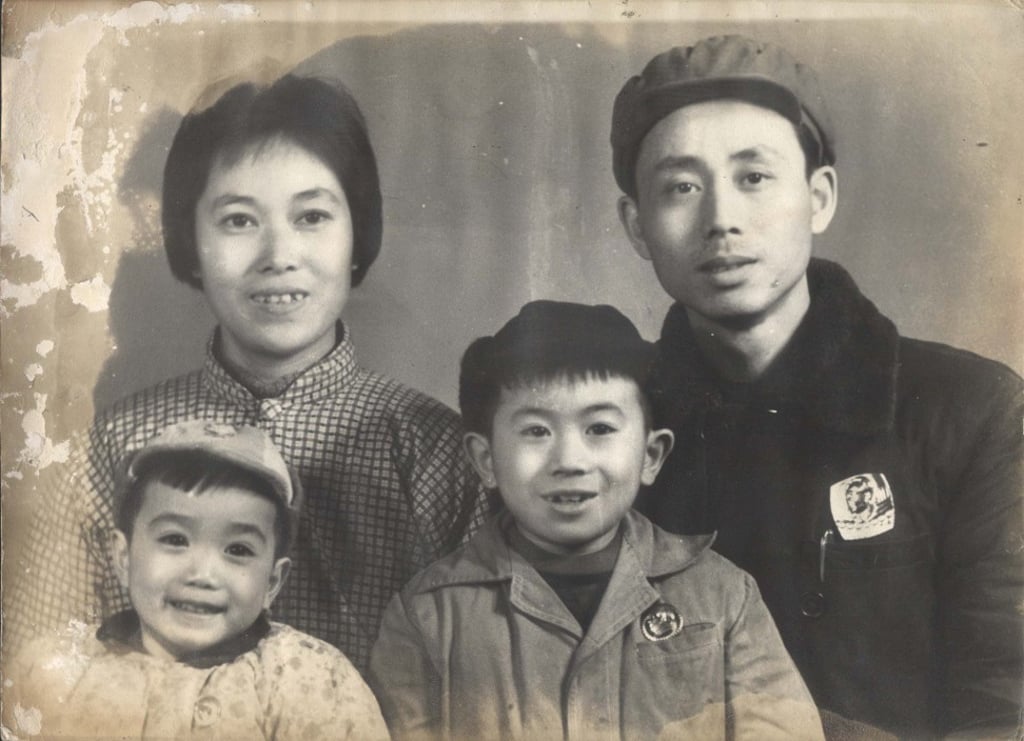
Child of the revolution I was born in Fuzhou, the capital of Fujian province, in 1962, the eldest son of Chen Binglin and Chen Junfeng, who were both primary school teachers. My brother, Chen Bin, was born a few years later. We grew up in Cangshan district, among the ruins of European buildings constructed when Fuzhou was a treaty port.
In 1966, the Cultural Revolution erupted across China. Though I was just a toddler, I remember it well. My father was a member of a moderate revolutionary group that became the target of an extreme faction. Some of my earliest childhood memories are of boxes, as everything in the house was boxed up as if we were ready to leave at any moment. I was often used as a lookout; my mother would ask me to go out in the alley and if I saw a group of people with red armbands wearing military uniforms I would report back. Then we would run away and hide.
When things got particularly dangerous, my brother and I went into hiding at my aunt’s house. She was my mother’s sister, only a teenager herself, but she lived in the countryside and far from the action.
Red guard My father was creative and literary. In those days, everyone had to write big-character posters and colleagues in his work unit recognised his talent. His managers did, too, but he could never get promoted as my mother came from a former landlord family – my maternal grandfather had been labelled a counter-revolutionary and eventually died doing labour on a farm where he had been imprisoned.
I was tasked with writing political slogans, which I, too, had a talent for. I went to middle school in 1975 but there were not many classes of any use beyond political indoctrination, and some humiliating self-criticism sessions. We studied agriculture and military tactics. Each school had its own farm and students went to eat and live there. For two months we cut firewood, raised the pigs, cleaned up the faeces and did other menial tasks.