US-China trade war – why everything you thought you knew is wrong
The popular perception of both the United States’ and China’s labour practices is, in fact, inverse to the reality, and has been for decades

A recent job fair at Koch Foods chicken plant in Forest, Mississippi, provided a rare opportunity for Eddie Nicholson. Even though he and fellow African-Americans in the state have some of the worst employment profiles in the United States, Nicholson was confident he could push the company to pay him US$15 an hour – US$4 more than typically offered for slaughtering, skinning, dismembering and packing chickens.
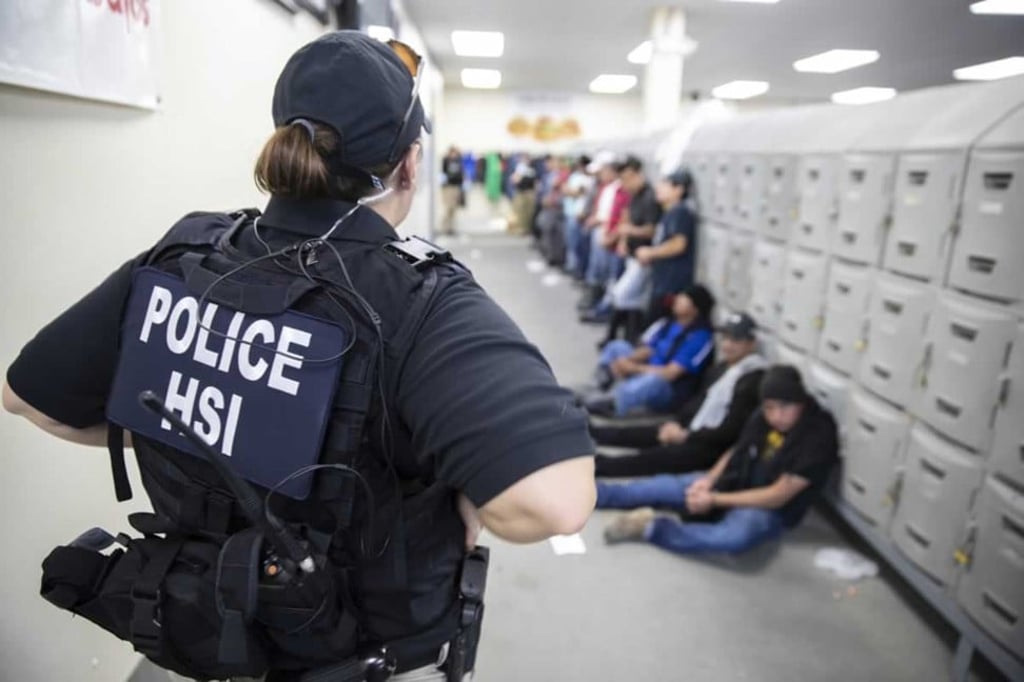
Days earlier, US Immigration and Customs Enforcement (ICE) officers had raided the Koch plant, along with others nearby, netting almost 700 unauthorised meatpacking workers, most of them from Mexico. Suddenly, with far fewer available workers in the area, Nicholson figured he had some leverage to negotiate.
Despite decades-old laws blocking employment of unauthorised labour, estimates say 8 million of the US’ 12 million illegal aliens are unlawfully employed, and this within a foreign-born population approaching 50 million – most of whom also work in unskilled positions and compete against blue-collar Americans for jobs. One group that should be paying close attention to what lies beyond the headlines of these and other tangential issues is the Chinese government.
Allegations of labour-market manipulation in the US have been levelled against the meatpacking and agricultural industries for years, by the likes of activist Cesar Chavez, elected politicians Romano Mazzoli and Lamar Smith (a Democrat and a Republican, respectively), the AFL-CIO union (in its post-war days at least) and advocacy groups Farmworker Justice and Numbers USA. Unlike goods manufacturers, meat producers and growers can’t outsource their production to cheaper labour markets, being inextricably tied to the land, livestock and local water sources. What they can do, however, is insource.