Advertisement
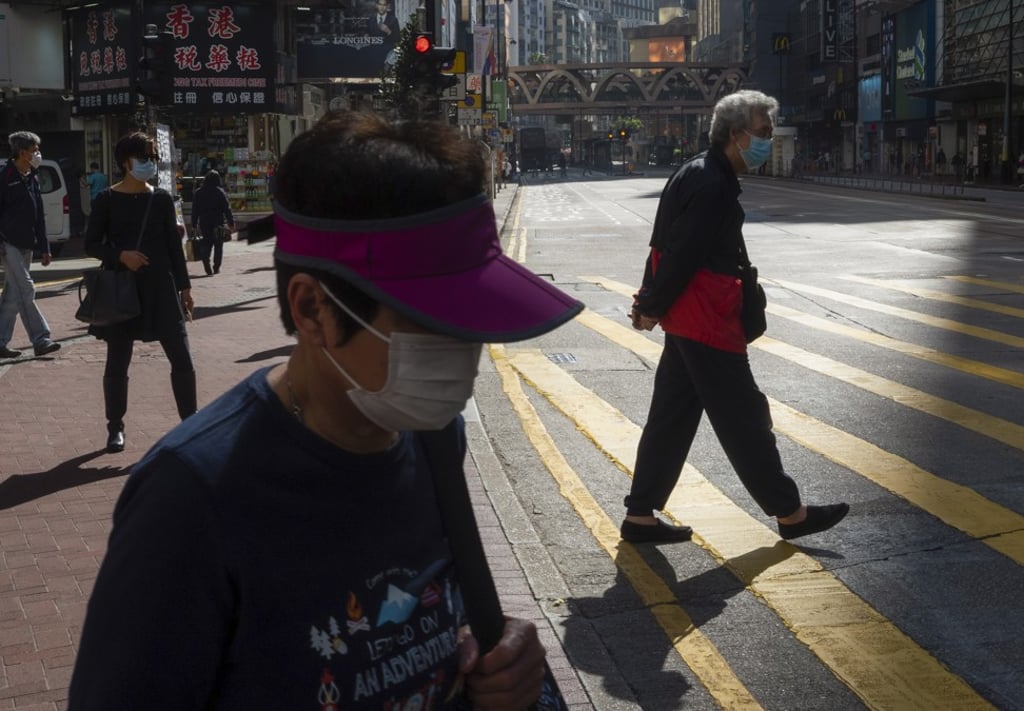
How face masks have become part of the Hong Kong identity
Seventeen years after the deadly Sars epidemic, masks are once again part of daily life in the city, but what are they doing to the face of society?
3-MIN READ3-MIN

Hard though it may be to believe, there was once a time when no one in Hong Kong wore a mask in public except for a laugh. Unless you were unfortunate enough to find yourself in hospital, masks were for jokers. (Or the Japanese – along with onsen and bonsai, they were considered part of that country’s arcane customs.)
Six weeks after the planes flew into the World Trade Centre, in September 2001, Central’s Pottinger Street was selling rubber masks of Osama bin Laden in time for Halloween. Eighteen months later, as the war in Iraq was about to begin, Raymond Wong – TVB’s man in Kuwait – donned a gas mask for a muffled on-camera report about chemical weapons. Oh, how we smirked.
That was the second week of March 2003. Already medical workers at the Prince of Wales Hospital, in Sha Tin, were falling mysteriously ill. Soon, the joke was on us: severe acute respiratory syndrome (Sars) revealed itself as the real biological weapon and in the following three months it would kill 299 people here (and 475 in the rest of the world). Although Covid-19 seems to be doing a better job of global domination this time round, for Hong Kong Sars was the more deadly experience.
Advertisement
In its desperation for armour, the city turned to masks. Then, as now, they were in short supply. Then, as now, there wasn’t strong evidence they gave full-on protection. Even if you wore them continuously in the outside world, the virus could still scythe you down at home: the single worst cluster, in Amoy Gardens, in Ngau Tau Kok, killed 42 residents via their bathrooms. But a belief took hold that masks would protect you, even if you wore them dangling from your ear or clasped under your chin or damp with the germ-laden moisture of your own breath; and that psychology has never left.
Advertisement
After Sars, the government had to persuade people to take off their masks: they may have been a community crutch but they weren’t a good look for tourism. By then, however, trust in Tung Chee-hwa’s administration was evaporating.
Advertisement
Select Voice
Select Speed
1.00x