Plague and Spanish flu shaped our world – will the coronavirus pandemic have as big an impact?
The Black Death killed as many as half of all Europeans and the worst influenza pandemic claimed the lives of up to 100 million people
Both fundamentally changed the fabric of societies. Will historians say the same about Covid-19?

In 2008, a young economist named Craig Garthwaite went looking for sick people. He found them in the National Health Interview Survey (NHIS). Conducted annually by the United States Census Bureau since 1957, the NHIS is the oldest and biggest continuing effort to track Americans’ health.
The survey asks a large sample of the citizenry whether they have a variety of ailments, including diabetes, kidney disorders and several types of heart disease. Garthwaite sought out a particular subset of respondents: people born between October 1918 and June 1919.
Those months were the height and immediate aftermath of the world’s worst-ever influenza pandemic. Although medical data from the time is too scant to be definitive, the first case is generally said to have been in Kansas in March 1918, as the US was stepping up its involvement in World War I.
In a flurry of wartime propaganda, American and European governments downplayed the epidemic, which helped it spread. Estimates of the final death toll range from 17 million to 100 million, depending on assumptions about the number of uncounted victims. Almost 700,000 people are thought to have died in the US – as a proportion of the population equivalent to more than two million people today.
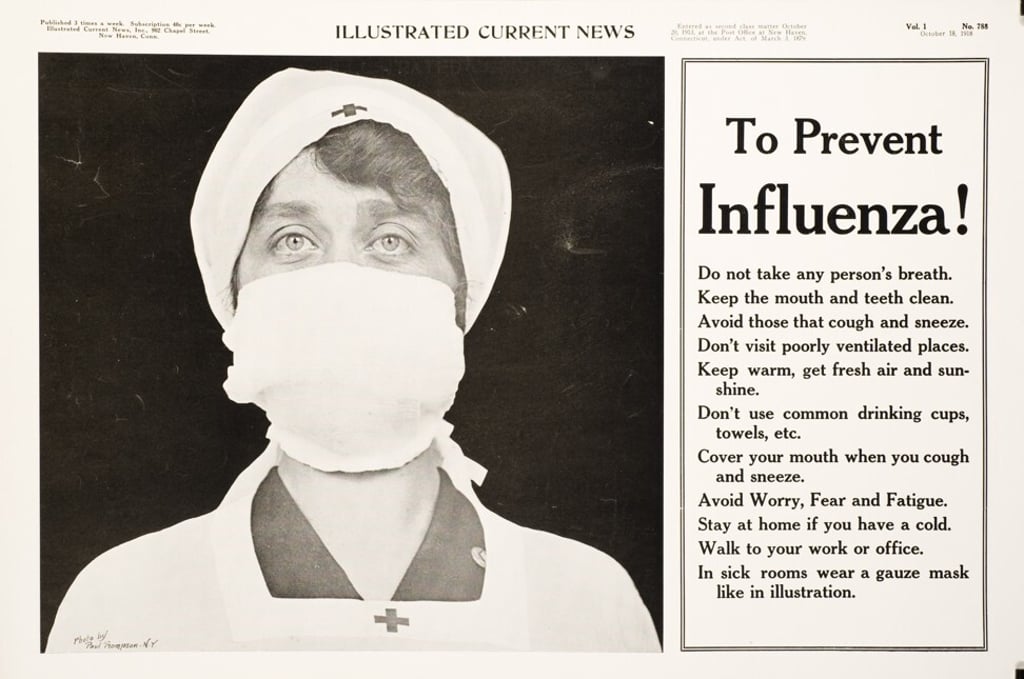
Remarkably, the calamity left few visible traces in American culture. Writers Ernest Hemingway, William Faulkner and F. Scott Fitzgerald saw its terrible effects first-hand, but almost never mentioned it in their work. Nor did the flu affect US policies – Congress didn’t even allocate extra money for flu research afterwards.
Just a few decades after the pandemic, American-history textbooks by the distinguished likes of Arthur M. Schlesinger Jnr, Richard Hofstadter, Henry Steele Commager and Samuel Eliot Morison said not a word about it. The first history of the 1918 flu wasn’t published until 1976. Written by the late Alfred W. Crosby, the book is called America’s Forgotten Pandemic.