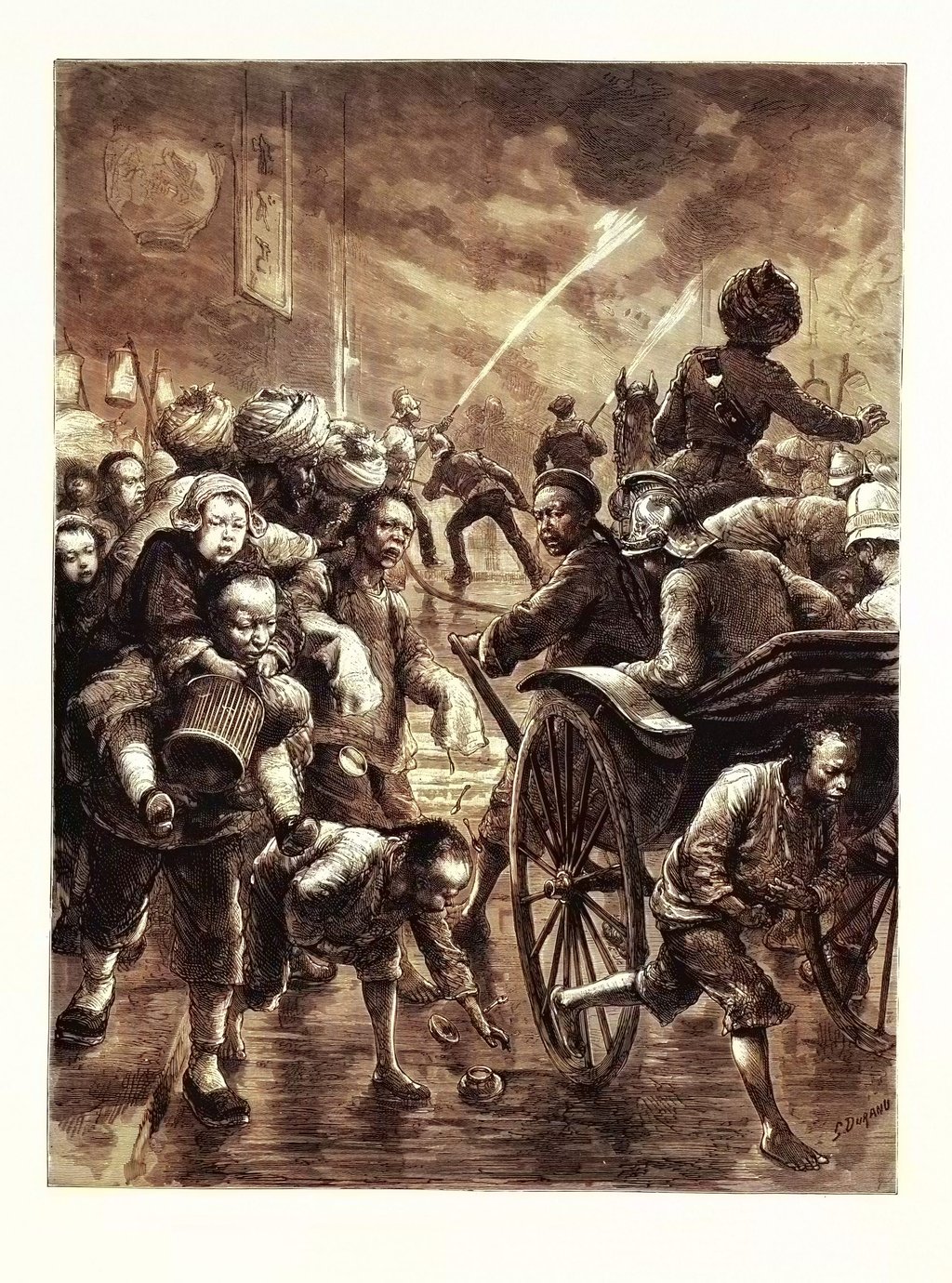
The history of Hong Kong’s Fire Services Department, and the devastating infernos that forced the city to form a proper response force
- Many deadly blazes during the mid-19th century that killed hundreds and destroyed countless homes could have been prevented had the city’s leaders acted faster

Before Hong Kong founded its Fire Services Department, in 1868, even before the British arrived, in 1841, each household would equip itself with a bucket filled with water, marked “do not touch”.
When a fire alarm was raised, nearby householders would rush out with their buckets and either join in the effort to extinguish it or lend their bucket to others, knowing they could claim it back once the fire was out.
But with the building frenzy that followed the British arrival in Hong Kong, it wasn’t long before fires had reached a scale that required more than a daisy chain of water buckets.
During the 1840s, Hong Kong had become not only a trading centre for the British, but also the primary base for its fleet and troops in the region. It was standard practice that the resident garrison would come to the aid of the town during any civil emergency. This meant the army dealt with most fires, which was just as well, since there was no government fire brigade and the police equipment didn’t even run to ropes, let alone buckets and ladders.
But for many stationed regiments, coordinating a response to the alarm – a bugle call from the North Barracks, near the shore – could be difficult. At a fire on October 21, 1845, confusion caused by soldiers unsure of which command to follow made matters worse, and a modest fire became more destructive than it should have been.
The following month, in an attempt to resolve the problem, Major General George Charles d’Aguilar issued a general order specifying that the garrison fire brigade at North Barracks should be first at the scene, supported by other regiments, some of which had their own fire engines.