Then & NowHong Kong history: the fortunes built on opium – including those of many of its richest families
During the 18th and 19th centuries, most of those involved in commerce on China’s coast had connections to the opium trade, whether they like to admit it or not

Opium – for numerous economic and political reasons – has loomed large in Asia for more than three centuries. Importation from India to China and the wider balance-of-trade dynamics, regional power struggles and eventual international conflicts that surrounded the trade have generated entire libraries of historical research.
Less acknowledged – especially by internet trolls who, like Pavlov’s dogs, salivate and bark at the slightest mention of the so-called opium wars – is the basic historical fact that virtually everyone involved in 18th- and 19th-century commerce on the China coast was connected with the trade. Individuals or firms were either directly involved or they brokered deals, banked or arranged letters of credit, or were tangled up in the shipping, refining and warehousing of opium, or its retail sale.
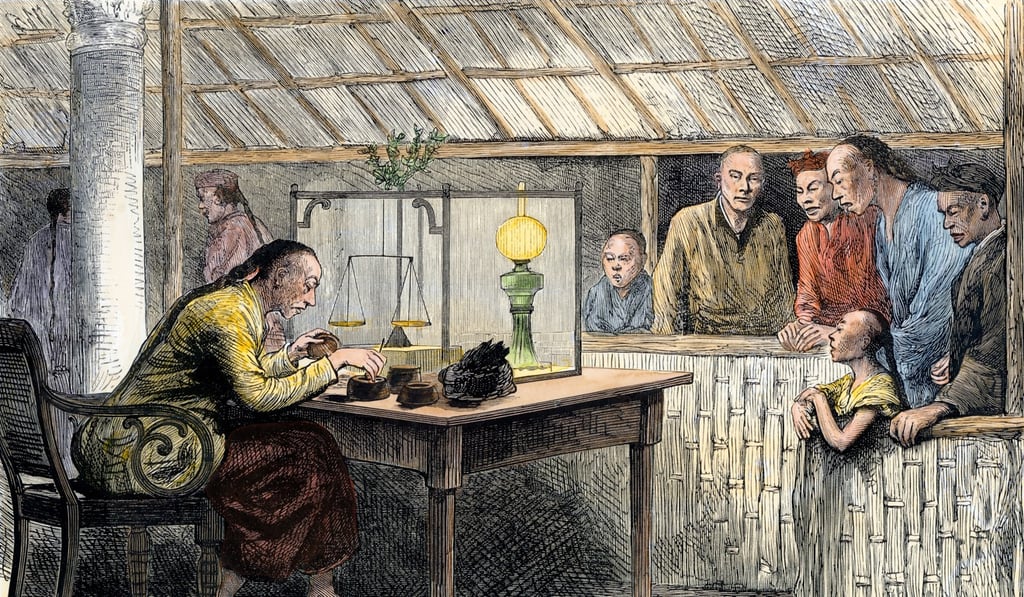
Their descendants become skittish at any mention of their forebears’ business activities – the original source of their own affluence. Few are as principled as, say, Austrian-British mathematician and philosopher Ludwig Wittgenstein, who renounced a family fortune made in steel production and the armament industry; that repudiation would be a bridge too far, especially for “pragmatic” Hongkongers. Corporate “histories” that document local firms and their founding families with connections to the opium trade usually airbrush out inconvenient facts and play down those that can’t be completely hidden while retaining any credibility.