Advertisement
PostMag
Life.Culture.Discovery.

Reflections | Traditional or simplified Chinese script? Issue divides Hong Kong, yet uniform characters united China once

The introduction of a standard script by China’s first emperor ensured that speakers of mutually incomprehensible regional languages could communicate with each other, and has united the nation for two millennia

Reading Time:2 minutes
Why you can trust SCMP
A pupil practises writing simplified Chinese characters in a primary school class in China. Advocates of simplified Chinese say it has helped lift millions of people out of illiteracy, but traditionalists despise the script. Picture: Xinhua
Harrow International School Hong Kong, in Tuen Mun, found itself at the centre of a storm this month after it released a statement saying it was dropping traditional Chinese characters from its curriculum for younger pupils in favour of the simplified script. Allegations of “mainlandisation” and “cultural repression” soon followed, highlighting the divide between traditional and simplified Chinese characters as being more than just the number of strokes used in their creation.

Not only does it involve the blue- and yellow-ribbon politics that colour everything in Hong Kong these days, it’s also about the pride Hongkongers take in having preserved an important aspect of Chinese culture that has all but disappeared in mainland China. And then there’s the prejudice, unapologetically expressed in the reference to simplified Chinese as “defective” characters as opposed to “correct” characters.
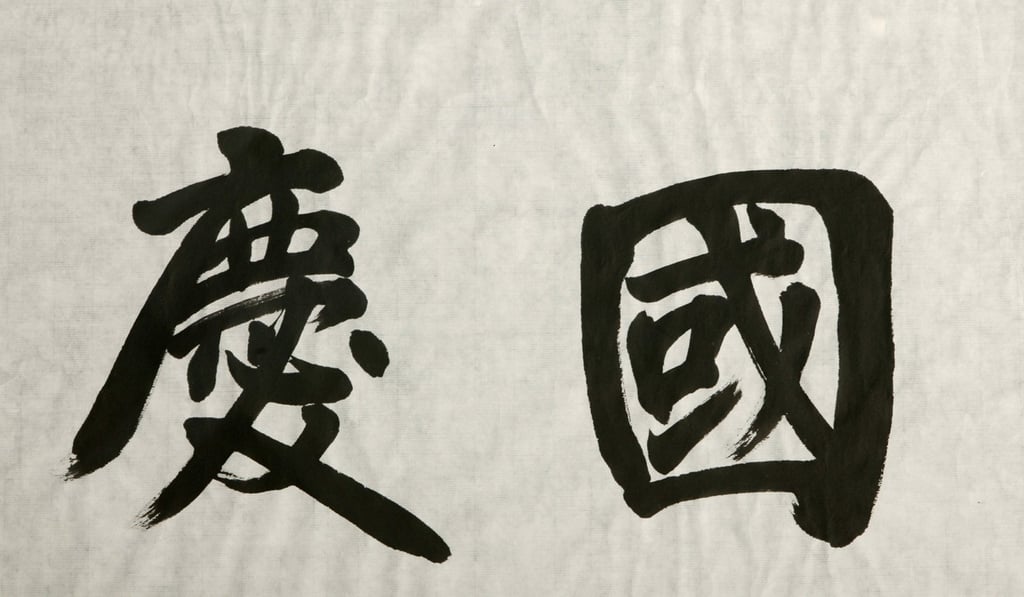
Guo Qing, meaning national celebration, written in traditional Chinese characters (calligraphy by Tsui Chunghui). Picture: Nora Tam
Advertisement
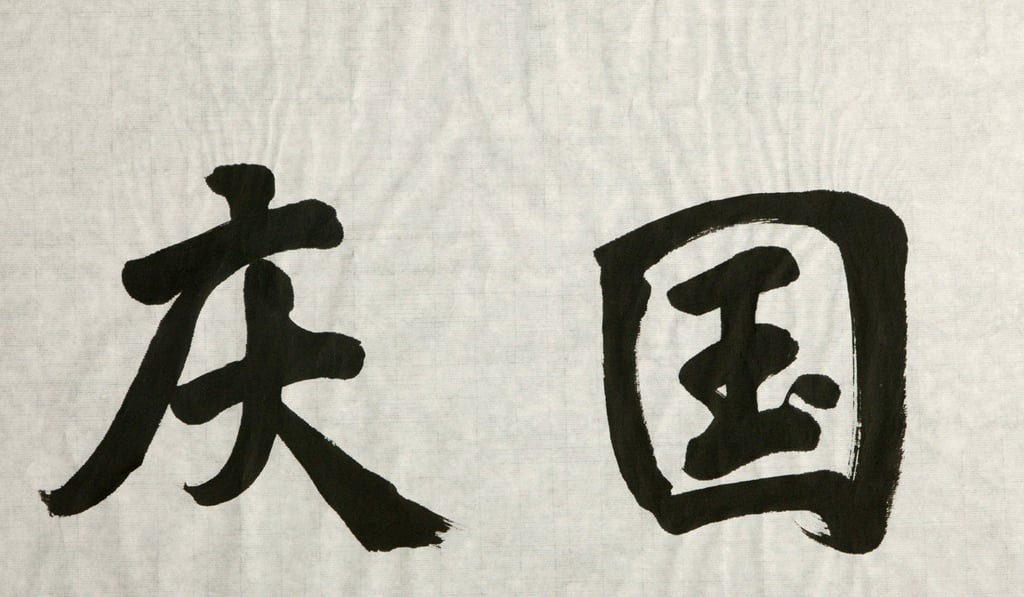
Guo Qing, meaning national celebration, written in simplified Chinese characters (calligraphy by Tsui Chunghui). Picture: Nora Tam

Interestingly, the same people who despise China’s simplified script have no problem with the Chinese characters simplified by the Japanese, which are often publicly and proudly displayed in Hong Kong.

Advertisement

Advocates for simplified Chinese claim that the less laborious writing system has lifted millions out of illiteracy, a crucial development in mid-20th century China. However, it is not certain whether this was because of the simplification of written Chinese or the general improvement of the nation’s education system.
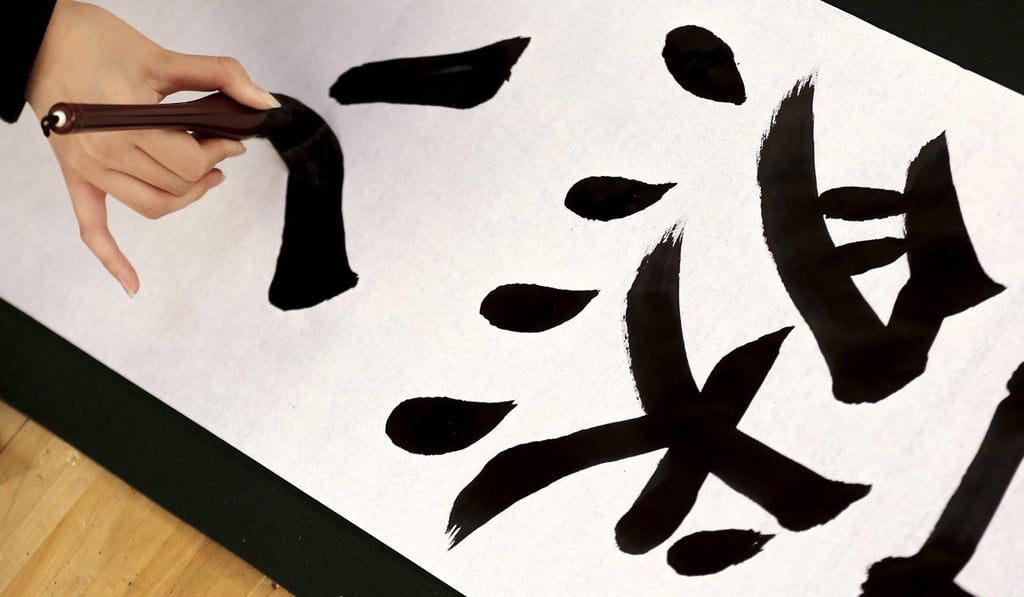
The same people who despise simplified Chinese characters have no problem with kanji like this one – Chinese characters simplified by the Japanese. Picture: Reuters
Advertisement
Select Voice
Choose your listening speed
Get through articles 2x faster
1.25x
250 WPM
Slow
Average
Fast
1.25x