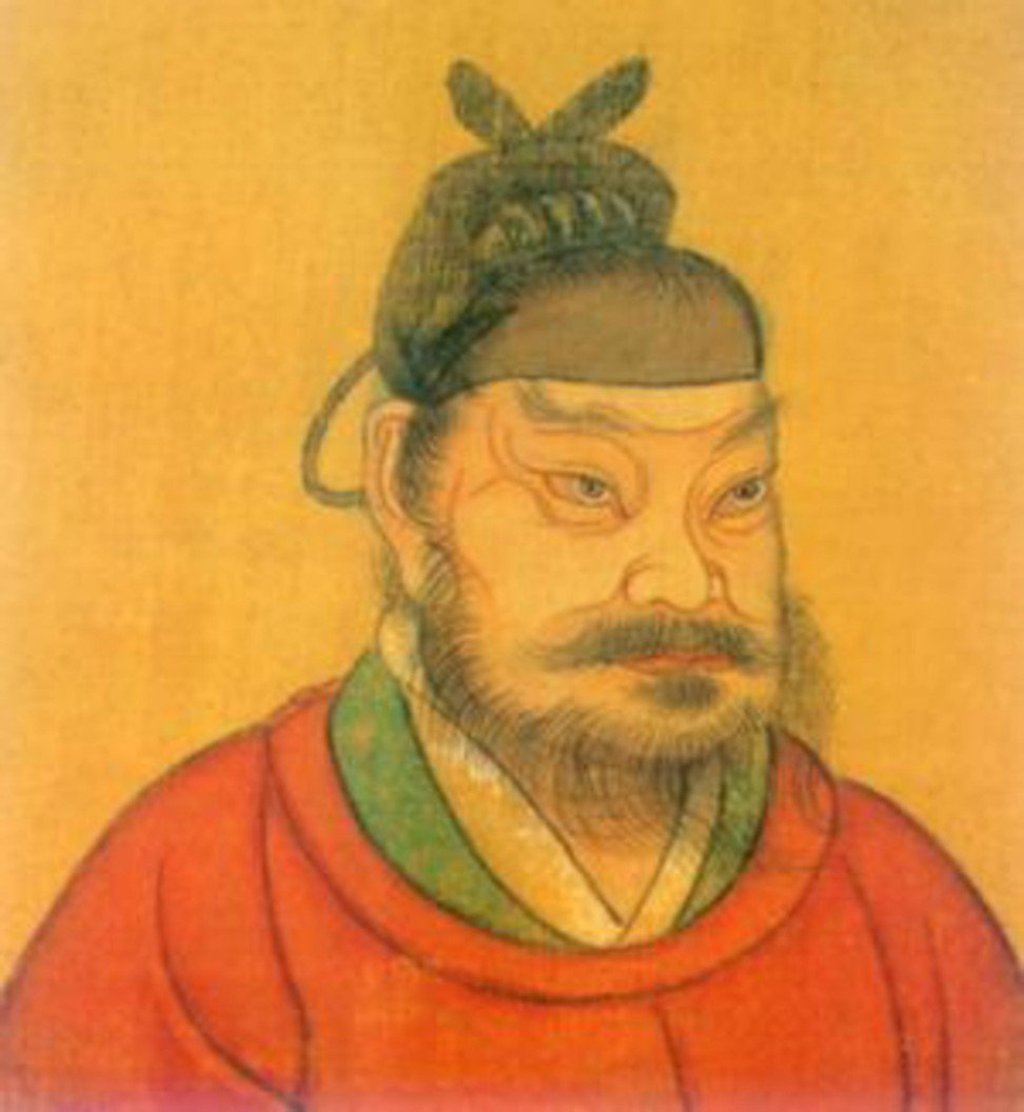
Reflections | After Trump treason accusation, how one Chinese emperor brought shame upon his nation
The case of Shi Jingtang, emperor of the Later Jin dynasty, shows the perils of pursuing power at any cost

Many Americans reacted with shock last month when United States President Donald Trump, with Russia’s President Vladimir Putin by his side, appeared to reject the findings of his own country’s intelligence agencies in favour of a Russian denial of election meddling.
One of the most infamous acts of treason committed by a Chinese head of state was Shi Jingtang’s submission to the Khitan nation in the 10th century. The great Tang empire had collapsed in 907, and the subsequent decades, known as the period of the Five Dynasties and Ten Kingdoms, saw a musical chairs of short-lived dynasties and the fragmentation of China into a patchwork of independent states.
Shi, whose ancestors were Central Asians, was an able military commander of the Later Tang dynasty (923-937), the second of the eponymous five dynasties, and the son-in-law of its Emperor Mingzong. After his father-in-law died, Shi betrayed the next emperor (his brother-in-law) to a rebel prince. When that prince ascended to the throne and began to doubt his loyalty, Shi launched an armed rebellion against the Later Tang dynasty in 936.
It was during a siege by government troops that Shi appealed to the powerful Khitan nation for help. The nomadic Khitan, whose name gave us the word “Cathay”, ruled present-day Mongolia and northern and northeast China as the Liao dynasty. Its rulers, Empress Dowager Shulü and her son, Emperor Taizong, agreed to help and sent their armies south, where they liberated Shi from the blockade and wiped out the Later Tang dynasty. In the winter of 937, the Liao dynasty installed Shi as emperor of the Later Jin dynasty (937-947).