ReflectionsFrom ancient China to Mong Kok – street performance was once a show of Chinese empire’s might
Enterprising emperors used spectacularly staged ensembles to communicate more than China’s ability to put on a good show

Street performance has been around since cities were first settled and it is the earliest from of mass entertainment. Having developed over the preceding centuries, the “one hundred acrobatics” (baixi) were already well established by the Qin and Han periods (221BC–AD220) in China.
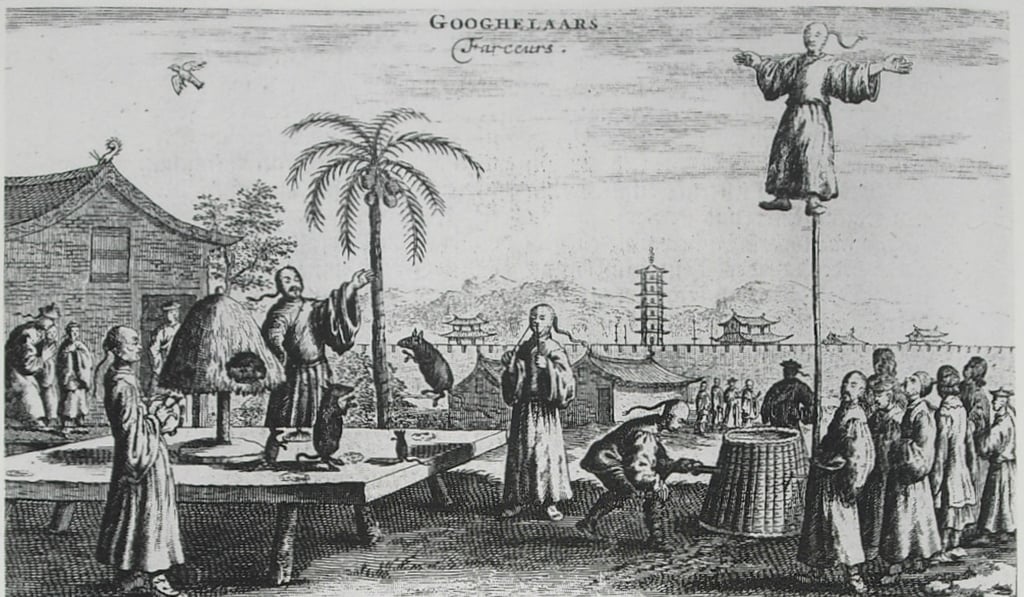
On the streets of the capital and other major cities across the empire, buskers performed remarkable and entertaining feats in exchange for cash. There were demonstrations of strength, skill, dexterity, agility and magic shows. Animals such as horses and monkeys were also trained to dance and perform amusing tricks.
For people who preferred more cerebral forms of entertainment, there were storytellers, musicians and singers, as well as street actors who riveted audiences with comic, tragic and romantic performances.
Street performances also served a political function. On at least two occasions, the imperial court recruited thousands of street performers to put on spectacular shows to showcase the empire’s enormous wealth and culture to foreign dignitaries. In the middle of the Yuanfeng-reign period (110–105BC), Emperor Wu of the Western Han dynasty entertained envoys from the Parthian Empire, centred in present-day Iran, and various Central Asian kingdoms with “one hundred acrobatics” featuring a cast of thousands.