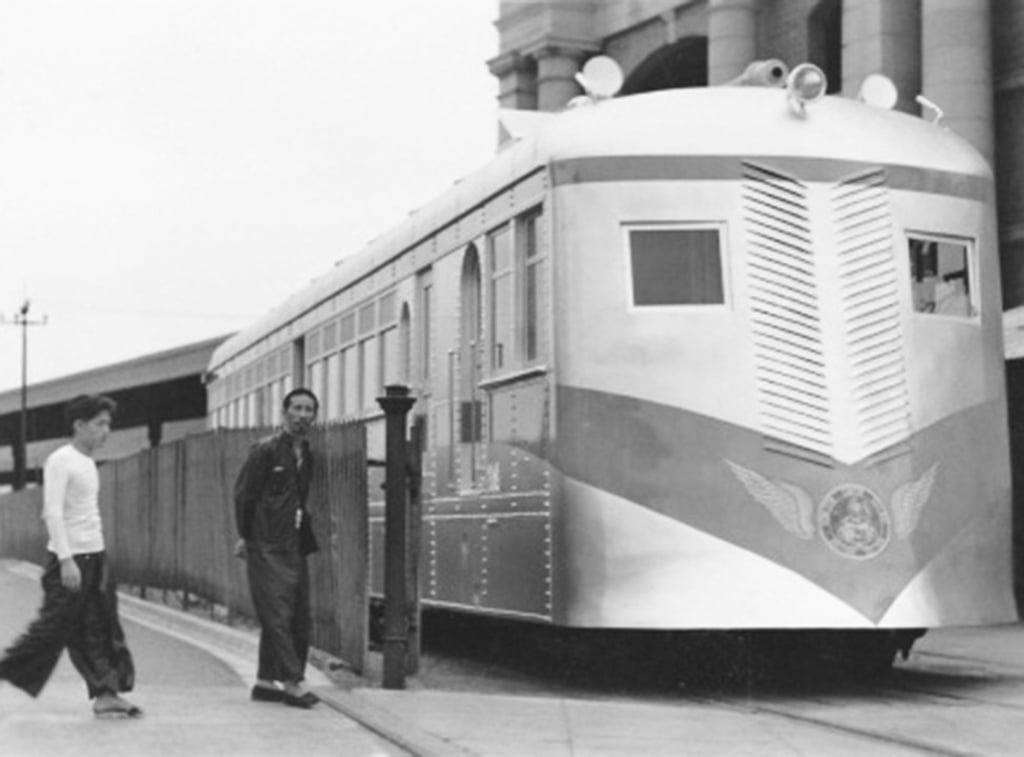
Then & NowNew Hong Kong-Guangzhou high-speed rail link takes longer than pre-1950s train services
Original express train from Tsim Sha Tsui to the centre of the Chinese city took just 90 minutes, when it started in 1937, before all links were cut with the Communist assumption of power

At long last, Hong Kong’s much-vaunted “high-speed” railway has opened. And what has Hong Kong got to show for more than a decade of political controversy, bitterly divisive public debate and eye-watering expense? A landmark infrastructure project whose uninspiring name – Vibrant Express – accurately reflects the unimaginative banality of the civil servants who foisted their tedious brainwave on everyone else.
Names such as the Golden Arrow, Flying Scotsman and Coromandel Express evoke a more classic sense of travel, a mode of transport that was somehow more than simply a means of getting from A to B. Vibrant Express lacks that romantic aura, or exciting sense of promise.
Cross-Rail – the initial suggestion – was quietly dropped several years ago; this name implied that the new line would cross borders, either physical or psychological. As every thinking person in Hong Kong now realises, recent years have seen the distinctions between Hong Kong and the rest of China steadily shrivel.
Earlier cross-boundary formalities – especially in terms of law enforcement – are now virtually meaningless. Once upon a time, the Basic Law stated that mainland officials were to have no jurisdiction in Hong Kong. This inconvenient clause was eventually “re-interpreted” by a higher authority to mean something substantially different to what the general public – in their innocence and ignorance – had blithely thought the stated words actually meant. So far, so Orwellian; and merely another symptom of where Hong Kong stands today.
After extensive metro connections from Guangzhou South, a passenger using the Vibrant Express will take longer to reach central Guangzhou than one using the existing through-train service from Hung Hom. Greater connectivity with the whole mainland was always the underlying intention; increased speed between the two cities was only ever of secondary importance.