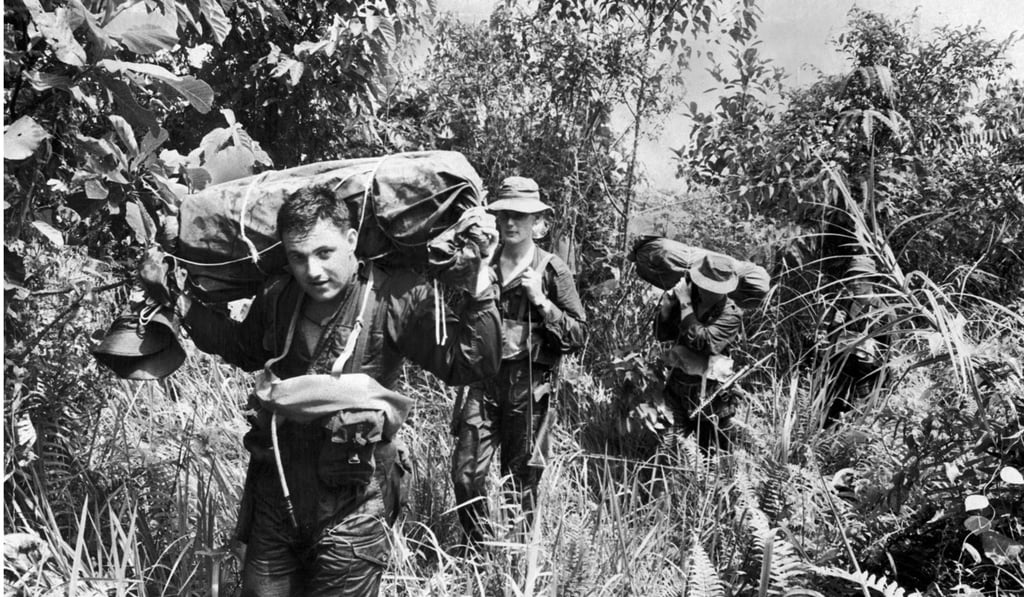
Then & NowWhy view Hong Kong-based Chinese soldiers with suspicion? They are only trying to help
Politicians were quick to condemn uniformed troops from the People’s Liberation Army’s Hong Kong garrison helping with the post-Typhoon Mangkhut clean-up, but why not see them for what they are?

Some 400 soldiers from the People’s Liberation Army’s Hong Kong garrison assisted in a rather belated clean-up along parts of the MacLehose Trail last weekend, nearly a month after Typhoon Mangkhut battered the city.
With several thousand young, fit men stationed in Hong Kong with little to do during peacetime (there is only so much basketball they can play in their off-hours), why not deploy them to help clear up typhoon debris?
After all, Hong Kong is part of China – like it or not. It is far better for the public to accept this reality, and make the best of it, than plaintively insist – as some stargazers continue to do – that this situation is not an unchangeable political fact. Part of that acceptance involves recognition that young men helping to clear fallen trees from rural trails – voluntarily or otherwise – are welcome extra pairs of hands, and not some lurking public enemy to be shunned and derided.
The usual suspects from what passes for Hong Kong’s pan-democratic camp were quick to condemn the visible military presence out of barracks – however helpful it may have been. And let’s face it, in Hong Kong’s steadily decaying, hopelessly polarised political climate, with no real leadership and widespread community suspicion about the motives behind any mainland initiative, this is an easy horse to flog.
As well as a worthwhile use of spare manpower resources, Military Aid to the Civil Community (MACC) activities in times of natural disaster are what the local garrison should have been doing for years. No doubt, many will see the assistance as yet another example of Hong Kong’s rapidly accelerating “mainlandisation”, and a further advance for what extreme localists regard as a foreign army of occupation. A more reasoned view sees the clean-up for what it was; a “hearts and minds” exercise undertaken with the expectation of the welcome side benefit of positive publicity (instead of the abuse they actually got).