Then & NowWhy the Greater Bay Area is an inaccurate name – we are part of a river delta
The renaming of the ‘Canton Delta’ as the ‘Greater Bay Area’ mirrors economic shifts sweeping across the region

Across the world, place names change over time. Universal designations become anachronistic and, eventually, archaic. Shifting political considerations cause a new name to be adopted as a symbolic fresh beginning. Dramatically changed physical geography – mountains quarried away or coastlines altered by reclamation, as has happened throughout Hong Kong’s urban history – also renders earlier designations obsolete. And so it is today, with what is now known as the new Greater Bay Area.
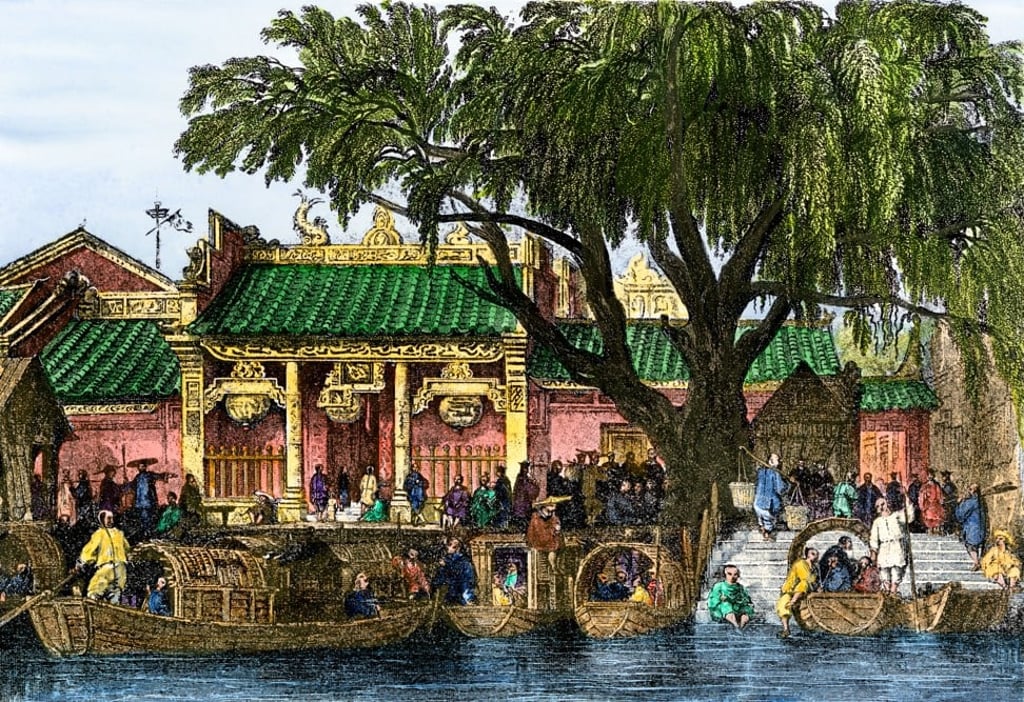
Early European travel accounts refer to the waterways around the Pearl River estuary as the Canton Delta; reasonably enough, as that city was the main destination for international trade and commerce for centuries. Memoir accounts simply reference the river system as “the Pearl”; much like “the Yangtse”, “the Ganges” or “the Amazon”, this name was so well known internationally that further elaboration was redundant.
The opposite side of the delta to Hong Kong was known as the West River districts, referencing the major tributary that flows into the Pearl River at Sanshui, just above Guangzhou. Literally “three waters”, Sanshui – now part of the greater Guangzhou conurbation – marks the confluence of the West, North and Pearl river systems, which, with their tributaries, drain much of Guangdong and Guangxi.
After Shenzhen and Zhuhai were designated as special economic zones in 1979, inward investment into the delta region, and relocation of Hong Kong factories to districts with significantly lower labour costs, saw the area transformed into one of the workshops of the world. Leveraging long-standing clan, native-place and dialect group allegiances was a key component of this economic take-off.
Associations organised along these lines, established in Hong Kong since the mid-19th century, and elsewhere in the Cantonese-speaking diaspora from San Francisco to Melbourne and beyond, all played a role in inward investment. Where early immigrants had settled overseas marked where investment came from a few generations later; Toishan saw most inward capital flows from North America, while Zhongshan received more from Australia.