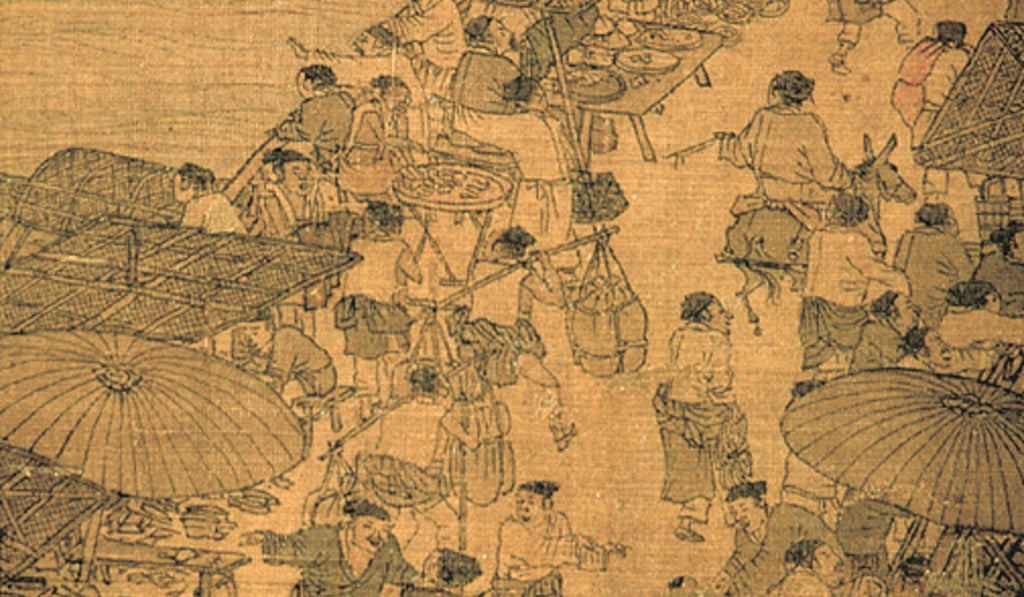
ReflectionsForget Singapore’s hawker culture, China has more than 2,000 years of history when it comes to street sellers
- There is no denying that hawker centres play an integral role in Singapore’s national identity, but they are not singular to the city state

Singapore’s bid to seek Unesco recognition for its hawker culture as an intangible cultural heritage had many Malaysians fuming. Apart from disparaging Singapore hawker food as a watered-down bastardisation of Malaysia’s “authentic” version, detractors also seethed at the city state’s audacity to claim, yet again, what they feel is rightfully theirs.
Such quarrels over heritage between the neighbours are not new (sometimes even Indonesia gets into the fray), underlining how intimately linked their histories and cultures, culinary or otherwise, are.
Critics of the Unesco application, however, are missing the point. The bid isn’t about a particular cuisine or its origin and ownership; it is about Singapore’s hawker centres and the important part they have played in national life. Like many of my compatriots, eating at hawker centres was and remains an integral part of my Singaporean-ness.
The phrase “hawker centre” seems oxymoronic because “hawker” suggests itinerant peddlers in random locations, whereas “centre” is the antithesis of that. Hawker centres have changed over the years and continue to evolve, but they have always offered affordable food in relatively clean surroundings. Singapore-style food courts, the air-conditioned iterations of hawker centres, have even been exported to cities across Asia.
Hawkers have been part of human history since the emergence of civilisations. In the beginning, farmers might have sold surplus produce from their land or livestock to buy goods they could not make themselves, such as oil, salt or more sophisticated farm tools. As time went on and human settlements became more complex, a specialised class of hawkers came into being.