
ReflectionsFrom foot-binding to big hair, in imperial China, beauty trends began in the palace
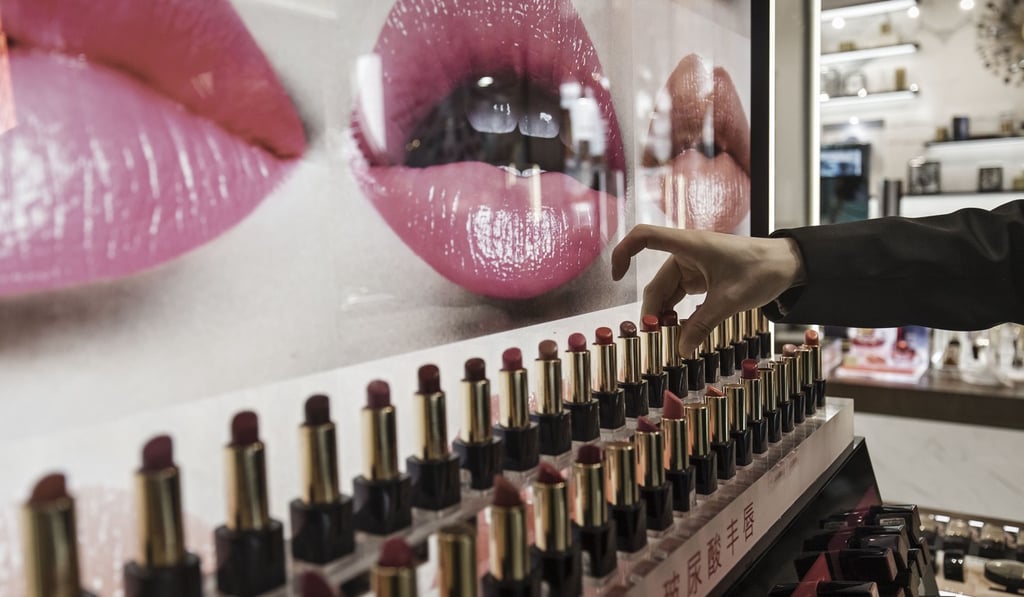
- The Palace Museum in Beijing recently released a line of lipsticks, which sold out within days
- In ancient China, fashion and cosmetic trends were started by the ladies of the Forbidden Palace

For decades, the mainland Chinese market for beauty products has been dominated by foreign brands. Last month, however, more than 100,000 lipsticks developed by the Palace Museum in Beijing were snapped by up online buyers within days of their launch. Many were reportedly attracted by the pretty packaging, inspired by artefacts in the museum’s collection.
This reflects a growing trend among mainland Chinese consumers of supporting home-grown brands and celebrating a genuine Chinese aesthetic across a variety of products. Unfortunately for those who bought the cosmetics, the products proved to be a case of style over substance, and production has ceased following countless complaints on social media.
That the Palace Museum, formerly the Forbidden Palace and residence of emperors, had created beauty products and sold them to the public harks back to the past, when the imperial palace, as well as the princely and noble houses, were the arbiters of fashion. Palace ladies would start a beauty or fashion trend, which would then percolate down to the denizens of the capital before radiating outwards towards the provinces.
A song was sung in the capital in the late first century AD during the Eastern Han dynasty: “When the palace fancies bouffant coiffures, women elsewhere raise their hair by one chi (equivalent to around 23cm); when the palace fancies thick eyebrows, women elsewhere paint theirs to cover half their foreheads; when the palace fancies voluminous sleeves, women elsewhere sew theirs with a whole roll of cloth.”
One interpretation of the song is that it was a criticism of the extravagance of Empress Dowager Ma, who was famed for her long, beautiful hair, which she wore in elaborate styles, and the unique way she painted her eyebrows to mask an imperfection on her left one. Although the empress dowager had projected an image of herself as a thrifty manager of the palace, the popular song, deemed sufficiently important to be recorded in full in the official histories, suggested that she might have been more extravagant than she made herself out to be.
On being informed of what the people were singing, Ma became more conscientious about reducing palace expenditure. Whether this interpretation is correct, the lyrics clearly indicated how closely the fashions of the palace were followed by “women elsewhere”.