
Then & NowHong Kong glass-clad skyscrapers are iconic, but the city’s windows were once glazed with oysters
By the mid-19th century, glass – once a novelty and a status symbol – had become ubiquitous in the city, effectively killing demand for the product previously used for window-glazing purposes

Glittering glass-clad skyscrapers have been a Hong Kong postcard cliché for decades. Mirror walls reach to the skies all over the city; in consequence, the local glass business remains quietly profitable. But what was used for window-glazing purposes before sheet glass became widely available in East Asia in the 19th century?
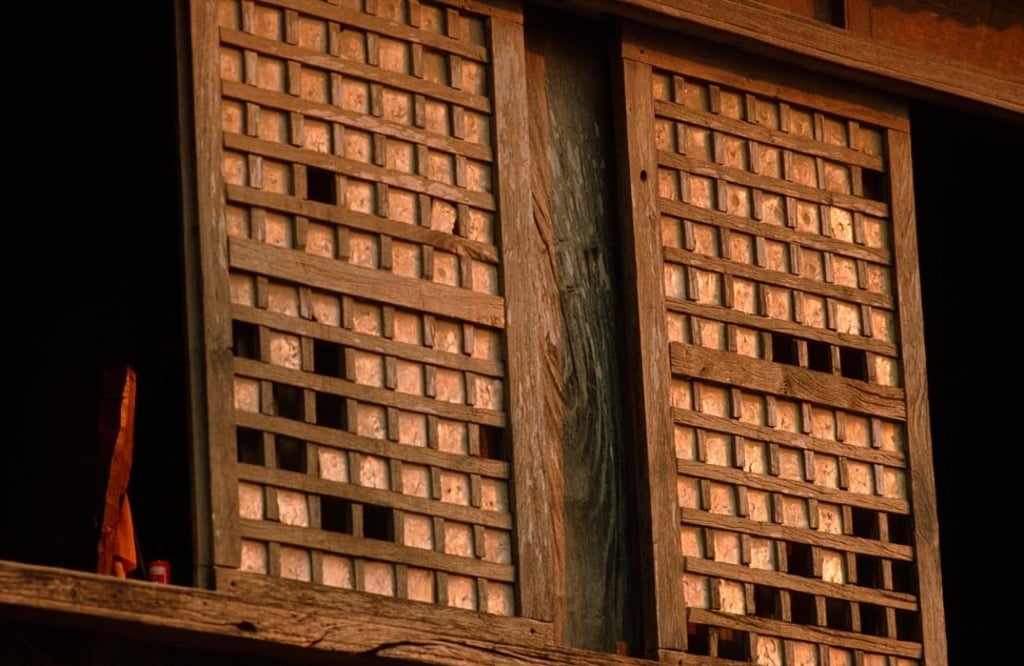
For centuries, a major source of window-glazing material in south China was not glass at all; the preferred material was trimmed-down shells of the windowpane oyster (Placuna placenta). This translucent substance can be found from the Gulf of Aden across the Indian Ocean to insular Southeast Asia. A major natural product in the Philippines, the windowpane oyster is known there as capiz or kapis; a province is even named for this bivalve.
These days, this shell is used more for decorative items, such as lampshades, chandeliers, tableware and picture frames, than for window glazing. But when older buildings are restored for heritage purposes in the Philippines, capiz panels are often carefully repaired, which ensures that traditional skills are retained and passed on to a new generation of artisans. Similar processes can be observed in Macau and other parts of south China.
Window-frame design had considerable regional variations. In south China, windowpane-oyster shells were typically inserted into a wooden panel in vertical, slightly overlapping strips, interspersed with wooden shutters, while in the Philippines, the shells were usually framed individually in intricately worked, typically square, wooden lattices. In north and central China, similar patterns were followed, though mostly with hexagonal or octagonal frames.
Brightly coloured glass panes were imported into China from the early 19th century, from Europe and North America. Like many import items at the time – chiming clocks, tinkling music boxes and pocket watches – the attraction of coloured glass was its novelty and status value; nothing similar was manufactured domestically. These glass panes were often used for fixed interior partitions, or inserted into carved wooden screens and other room dividers. A decorative advantage was that these allowed coloured light to fall within a room, and, unlike external glass panels, were not at risk of breaking in bad weather.