
Then & NowA romance between a British officer and a Japanese divorcee: timeless like Madama Butterfly
Amid the countless short-lived affairs between Western men and Asian women during the late 19th and early 20th centuries, there is one that stands out

The Anglo-Japanese alliance, formalised in 1902, lapsed in 1922. Until the outbreak of the Pacific war in 1941, however, British military personnel and diplomats were posted to Japan to learn the language; their Japanese counterparts usually came to Hong Kong or Singapore to learn English. In these years, acquisition of a “sleeping dictionary” enabled these students to acquire a deeper understanding of Japan’s language, culture and society.
Only rarely did Japanese women from respectable families enter into such relationships – most sleeping dictionaries came from impoverished backgrounds, where economic incentives to become involved with a wealthier protector, of whatever ethnic background, were deciding factors. Tolerated by their broader communities, these affairs were accepted as long as they remained discreet, temporary and childless.
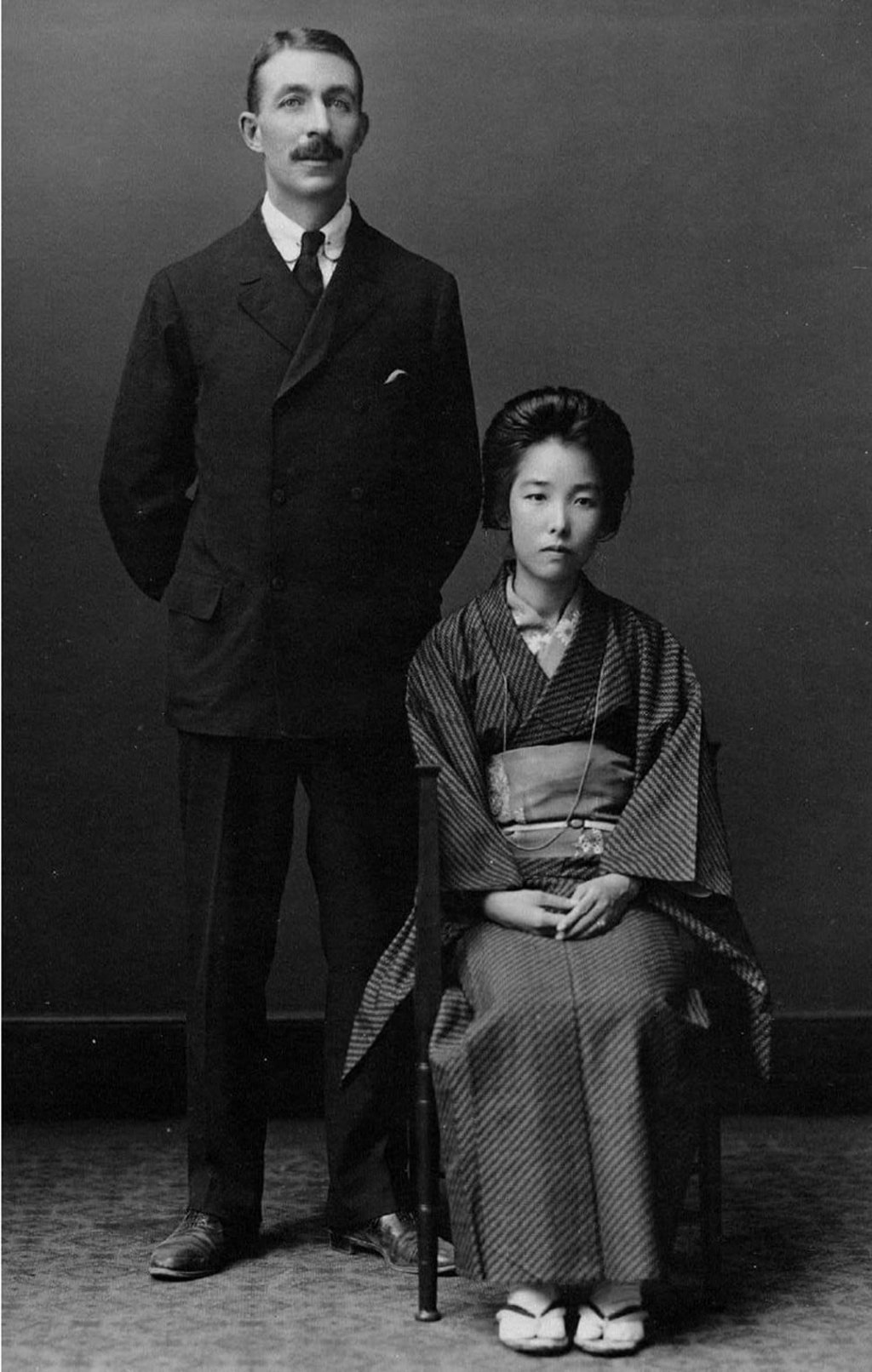
Unpredictable human emotions and unexpected pregnancies sometimes rendered initially transient, transactional relationships into longer-lasting connections. One such situation developed between Arthur Hart-Synnot, a British Army officer of Anglo-Irish descent, sent to Japan for language study in 1904, and Masa Suzuki, the divorcee daughter of a Tokyo barber. The couple had two sons – Kiyoshi, in 1906, and Hideo, in 1910 – who took their mother’s surname. Hideo died at the age of six.