ReflectionsShinzo Abe or Abe Shinzo? The complex cultural politics of Asian names
After Japan’s foreign minister requested the Western world follow Japanese naming convention, a look back at the ‘civilised’ associations of a surname

Japan recently requested that foreign media refer to Japanese names in the native way: family name first, followed by the given name. Instead of Shinzo Abe, for example, the country’s prime minister now prefers to be called Abe Shinzo in foreign language news reports, placing his family name “Abe” before his given name “Shinzo”, which is how he’s actually known among Japanese. To some, this switch-around is a reflection of the nationalistic bent typical of Japan’s governing elite and their constituents; to others, it’s simply righting an erroneous century-old convention that was informed by Japan’s then desire to “leave Asia and join the (developed) West”.
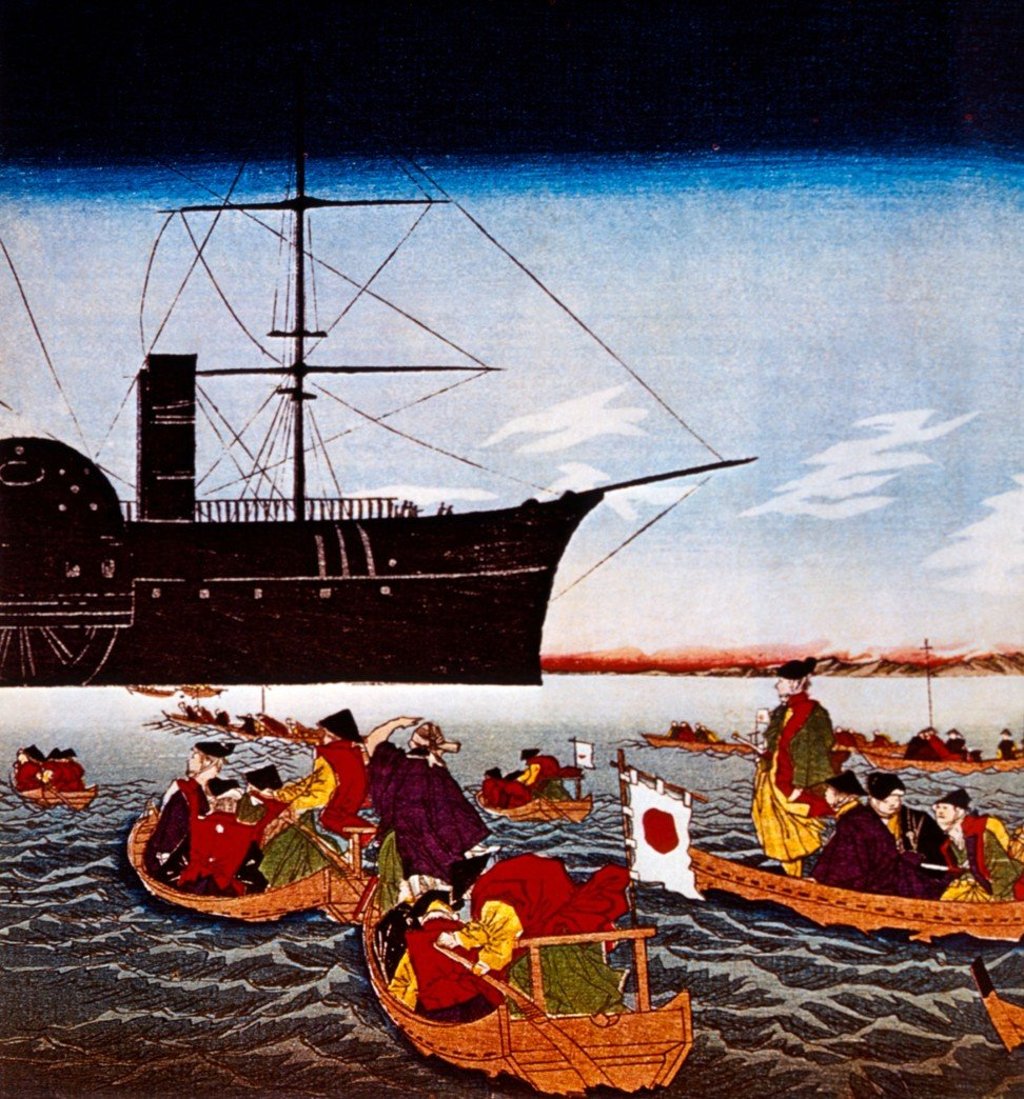
In 1853, Matthew Perry, a commodore of the United States Navy, sailed into Tokyo Bay with his “black ships” and forced Japan to open up its ports to American merchant vessels. Japan, then a closed and backward nation, responded with an ambitious programme of modernisation along Western lines, known as the Meiji Restoration. The convention of placing surnames after given names was adopted by the Japanese during this period, when the country was a zealous student and convert of all things Western.
Even before name order became an issue, there was the subject of surnames themselves. Before the mid-19th century, most Japanese simply did not have surnames, which were the prerogative of aristocrats and samurai. Common people used only their given names, occasionally adding their place of origin (for example, “Ichiro from such-and-such a town”), place of employment (“Naoto of the Danba merchant house”), and other methods of identifying and differentiating themselves.
Convinced that a “civilised’ nation was one in which every citizen had a family name, the government ordered all Japanese who didn’t have a surname to register one with the authorities. Many of these newly minted surnames indicated locations, such as “middle of a field” (Tanaka), “foot of a mountain” (Yamamoto), “middle village” (Nakamura), and so on. Siam (present-day Thailand) went through a similar process, when formal surnames became mandatory in the early 20th century.
While the Japanese and the Siamese thought the lack of a family name “uncivilised”, many in Asia believed otherwise and went on without one. Passports issued in Singapore and Malaysia, for example, do not make the differentiation between surnames and given names even when the holders have both (as Singaporeans and Malaysians of Chinese descent do). In both countries, people of Malay-Muslim heritage, as well as many ethnic Indians, do not have surnames that are passed down from parent to child, using a patronymic naming system instead, such as Ahmad bin Mohammed, where “bin” means “son of”.