
Then & Now | How Oxford Union’s controversial ‘king and country’ debate dogged Kenelm Digby all his life
- Digby sought solace from early-uttered, ill-considered words in Asia, and then New Zealand
- However, he was never completely able to escape the nightmares of the past

A few ill-considered words, spoken hastily in youth, can dog one’s entire life. Kenelm Digby would know. A defining moment of British public life in the 1930s was a notorious Oxford Union debate, when the house declared that its members would not, under any circumstances, “fight for king and country” should there be another world war.
Chaired by Digby, the debate made international headlines, and turned the young law student into a national hate figure. After graduating from the university, he qualified as a barrister and – largely to escape lingering controversy – joined government service in Sarawak, Borneo, then ruled by Vyner Brooke, the last White Rajah.
Unexpected Hong Kong connections exist; Digby had a distant cousin with the same name, a professor of surgery at the University of Hong Kong, who was later interned at Stanley during the Japanese occupation. In addition, the former Digby’s future wife, Mutal Fielder, was a Hong Kong girl. Born in 1921, the daughter of a Butterfield & Swire executive, she was raised on The Peak, schooled in England and trained as a ballet dancer in London and Paris.
On the P&O liner Narkunda, sailing back to their respective territories from Britain in 1940, the couple met and became engaged. When the Pacific war broke out, in December 1941, they spent the Japanese-occupation period interned in camps on opposite sides of the South China Sea; he in Kuching, Sarawak, and she in Stanley, with her parents.
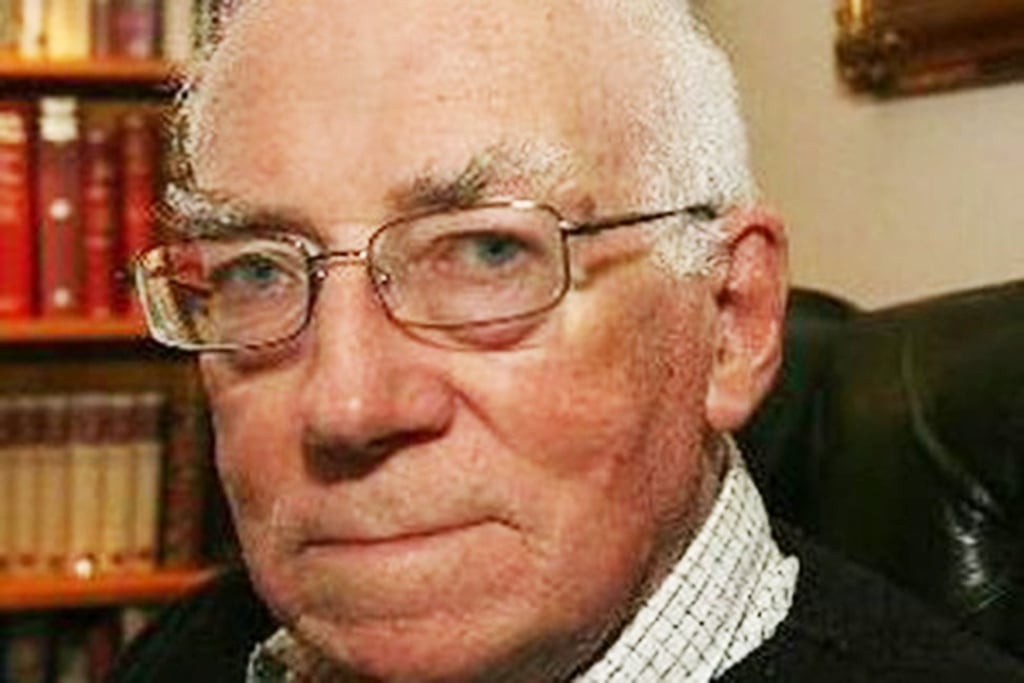
Unlike many others, their pre-war shipboard romance survived the conflict; after four years with no contact whatsoever, they married in England, in 1946, and returned to Sarawak, where they lived until 1951. Digby became attorney general there before migrating in 1955 with his family to New Zealand, where he died in 2001; Mutal died in 2016. To the end of his life, he kept a scrapbook filled with vituperative press cuttings from the 1933 Oxford Union controversy, along with two white feathers – symbolic of cowardice – that were anonymously sent to him, as a reminder that the courage of one’s convictions, all too often, comes at considerable personal cost.