Then & NowThe 2019 Hong Kong protests and the 1967 riots: some things never change
From Lennon Wall equivalents to a largely absent leadership, there are several striking similarities between the 1967 riots and the current unrest in Hong Kong

As Hong Kong’s summer of discontent trudges on, comparisons to the deadly riots 52 years ago, when leftist-inspired unrest rocked the British colony, continue to appear. When attempts are made to draw lessons from events of the past, some analogies are appropriate and help illuminate the present day while others fall wide of the mark.
Other parts of the world, notably in North America, Australia and New Zealand, have seen their own Lennon Walls – especially at universities – vandalised by mainland Chinese sympathisers who, according to various reports, have not been discouraged by Chinese state agencies, including regionally based consular officials in Brisbane, Auckland, Vancouver, Los Angeles and elsewhere.
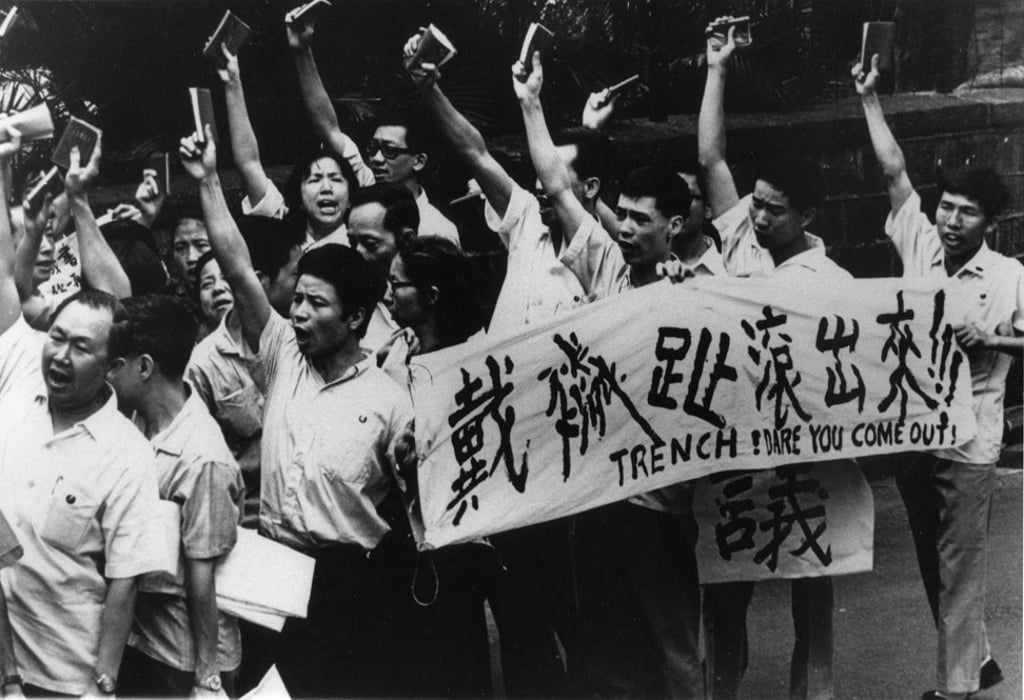
Lennon Wall equivalents existed during the 1967 riots; at that time, handwritten placards in both English and Chinese were plastered all over the Government House gatehouses on Upper Albert Road, in Central. “Trench – Dare You Come Out!” was one rallying cry, a cutting reference to governor David Trench’s rare public appearances; he was later shunted off to Britain on leave to allow more capable subordinates to restore order.