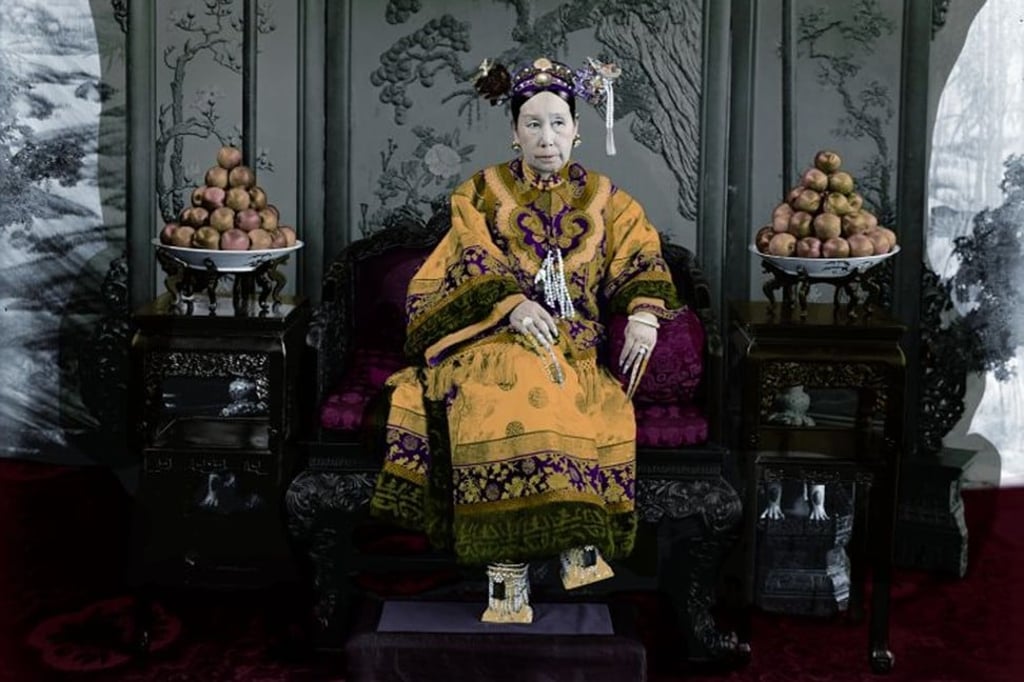
Reflections | WeWork co-founder’s scandalous succession plan was commonplace in imperial China
- Among the dubious practices Adam Neumann is accused of is giving vast powers to his wife in the event of his death
- For many widows of Chinese emperors, assuming control after their husbands’ had died was par for the course

The recent fall from grace of Adam Neumann, the Israeli co-founder and former chief executive of WeWork, makes for compelling reading. With more than a dozen “co-working” spaces in Hong Kong, WeWork is the sexier and costlier iteration of shared office space, where companies rent desks in the same se zi lau (“building or room for writing words”, a quaint expression used in Hong Kong and some parts of mainland China to refer to offices). Among the dubious business practices Neumann is accused of, is the act of giving his wife Rebekah, also a co-founder of the company, vast powers in the event of his death, including the right to name his successor.
This arrangement is reminiscent of instances in China’s imperial past, when the widows of dead emperors were thrust into the centre of things.
Some empresses were able to step into the power vacuum left behind by their dead husbands and more than held their own against the men in the government and the military. It might have been the sheer force of their charisma that commanded the loyalty of their subjects, or their late husband’s lieutenants might have known them on a personal level. Even before their husbands’ deaths, most were familiar with policy making and implementation, as well as the workings of the bureaucracy.
Ultimately, these women were all consummate politicians who could work different factions against one another, form alliances with powerful individuals or cliques, and when push came to shove, rid themselves of their enemies and even their own flesh and blood with ruthless efficiency.