ReflectionsWhy has Hong Kong adopted Halloween when it already has the Hungry Ghost Festival?
- All Hallows’ Eve is an ‘imported holiday’, celebrated by the city but with little cultural relevance for most residents
- Folk traditions and Buddhism have already given Chinese culture its own day, or days, of the dead

For most, it is simply an excuse to have a good time, and there is nothing wrong with that. If there is any place that needs a good time right now, it is Hong Kong.
People past and present have adopted foreign practices that fall into the category of “culture”, such as belief systems, festivals, languages, foods, forms of entertainment and so on, and adapted these until they become part of their own culture. Hong Kong’s adoption of Halloween is just one example of this ongoing human endeavour.
Having said that, I haven’t seen much localisation of Halloween in Hong Kong; it has remained a foreign import. Over the years, the costumes that the local children in my neighbourhood have donned to go trick-or-treating have been consistent and predictable. If they are not dressed up as the most popular cartoon character or princess of the moment, they are stock characters of maleficence in the Western tradition, such as witches wearing pointy hats or aristocratic vampires in capes.
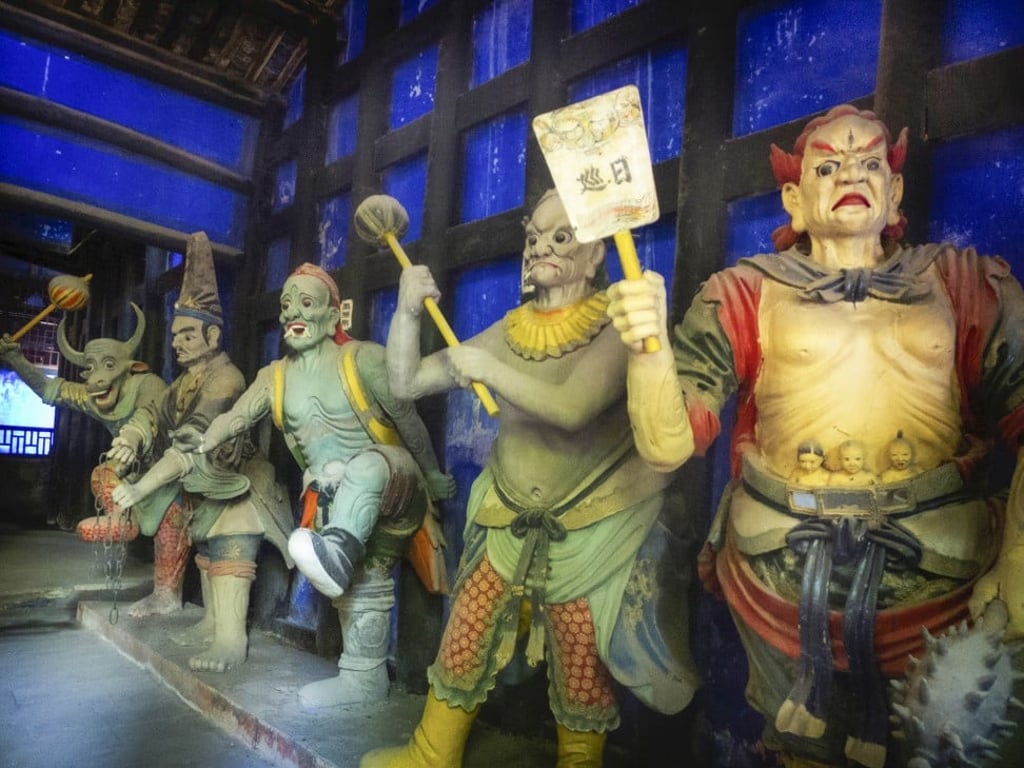
Where are the local children who are dressed as heroes, heroines or supernatural beings of Chinese folk traditions? Why aren’t they in ghoulish make-up, with protruding fangs and tongues, wearing the long robes of the White and Black Wuchang, the henchmen of the King of Hell who apprehend the souls of the dead with their chains and hooks and lead them to the afterlife? Where, indeed, is the King of Hell, Yanluo Wang, on Halloween?