Language MattersWhere Molotov cocktails seen in Hong Kong protests got their name – think Nordic gallows humour
- The Molotov cocktail has become part of the lexicon of Hong Kong protests. Thank wartime Finland for this nickname for the petrol bomb
- The water caltrop, whose dried seed pod feudal Japanese use to make a spiked weapon to slow troops’ advance, has lent its name to another device protesters use

Once upon a time in Hong Kong, one might have eaten boiled water caltrop (lìhng gok) – also known as bat nut or moustache nut – during the Mid-Autumn Festival, or gone out for a cocktail after work. Now in the winter of our discontent, the words “caltrop” and “cocktail” have assumed different connotations.
Today’s Hongkonger is better acquainted with the weaponised caltrop – from the Latin calcitrapa (“foot trap”) – a metal device with two or more sharp spikes arranged such that one of them always points upwards when thrown. The ancient Greek tribalos (“three spikes”) and Roman tribulus, or murex ferreus (“jagged iron”), were used to slow the advance of troops and especially horses, chariots, war elephants and camels.
In the Hong Kong protests, they are being fashioned from PVC pipes and nails, among other things, and used to impede police vehicles. A Japanese version, used in feudal times and in defence of samurai fortifications, is makibishi, made of iron or from the dried seed pod of the water caltrop.
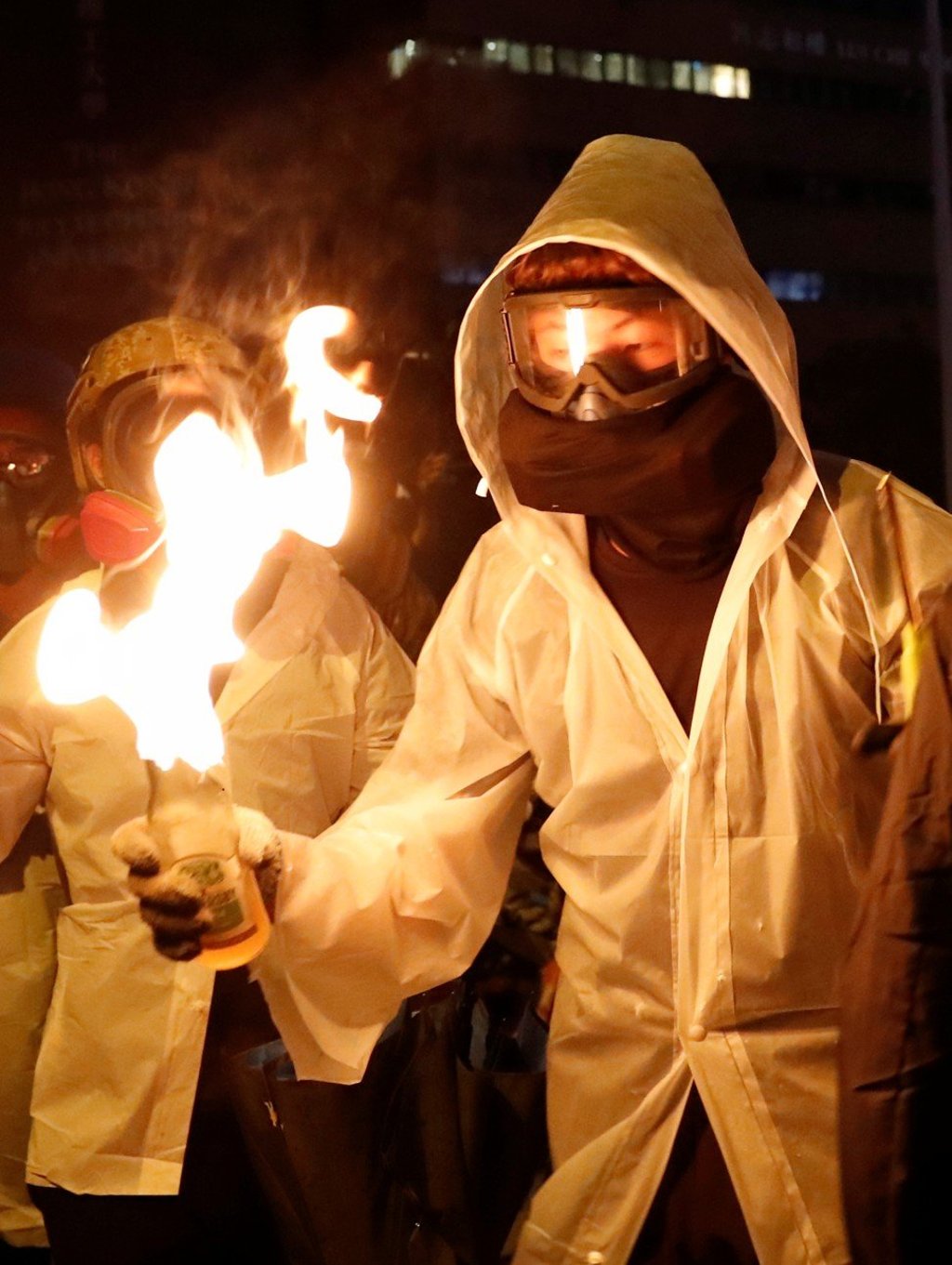
During that conflict, Soviets used a cluster-bomb device against Finnish troops. The then Soviet commissar for foreign affairs, Vyacheslav Molotov, insisted Soviet aircraft were not dropping bombs but packages of food for their “starving” Finnish comrades.