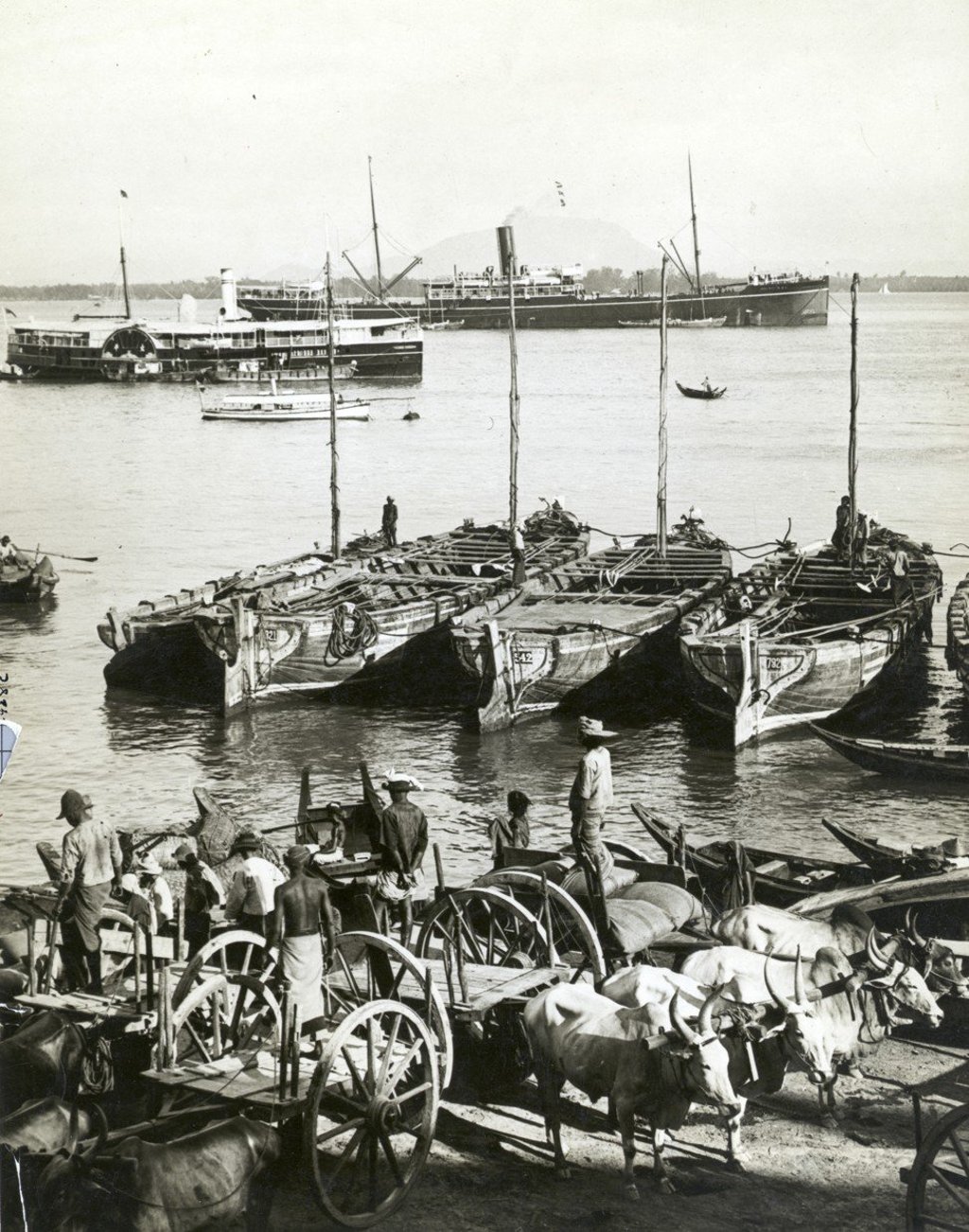
It is fair to say that the city of Wuhan is now world famous, albeit for the most unfortunate reason. Its location at the confluence of the Yangtze River and one of its tributaries, the Han River, has ensured its economic and strategic importance throughout most of China’s history. The current configuration of the city only came about relatively recently, however, in 1926, when Wuchang, Hankou and Hanyang, three cities situated where the Yangtze and Han Rivers meet, were combined into a new city called Wuhan.
The area around Wuhan, like much of present-day central and southern China, was at the periphery of the Chinese nation in the pre-imperial past. The area first came to prominence at the end of the Han period (202BC-AD220), when the massive army and navy of Cao Cao were decimated at the Battle of Red Cliffs, in 208, by the vastly outnumbered combined forces of the warlords Liu Bei and Sun Quan. Cao’s decisive defeat laid the foundation for the Period of the Three Kingdoms (220–280). While historians have long debated the exact location of the battle, it is agreed that it was fought near Wuhan. Sun then established his capital in present-day Ezhou, near Wuhan, and founded the state of Wu, one of the three kingdoms of the eponymous period.
Over the subsequent millennium, the area thrived and developed into a commercial and cultural hub. In 1281, the Mongol rulers of the Yuan dynasty chose Wuchang as the capital of Huguang, a vast provincial-level administrative region that stretched from the southern banks of the Yangtze River to the southern coast, including the island of Hainan. Wuchang, which would form part of Wuhan, became a key political, military and economic centre of central and southern China.
Advertisement
Wuhan’s location, on the Yangtze River, has long ensured its strategic importance. Photo: Getty Images
As a result of the Treaty of Tientsin (Tianjin), which was forced upon the Qing dynasty by several foreign powers in 1858, Hankou (or Hankow) became a treaty port in 1861 with a substantial presence of British, Russian, French, German, Japanese and other foreign nationals. International trade accelerated Hankou’s economic and infrastructural development, and it became known as the “Chicago of the East”, second only to Shanghai as one of China’s wealthiest and most cosmopolitan cities.
Advertisement
On 10 October 1911, the Wuchang Uprising ushered in the revolution that overthrew the Qing dynasty and millennia of monarchical rule in China. Fifteen years later, in the midst of civil strife among warlord factions, the Republican government merged Wuchang, Hankou and Hanyang into Wuhan, and made the city its new capital.