Advertisement
PostMag
Life.Culture.Discovery.
Religion in China
MagazinesPostMag
Wee Kek Koon

Reflections | A brief history of Islam in China – including a moment of prominence

  • The religion is believed to have arrived in the 600s, brought in by traders from the Middle East and Central Asia
  • Although Muslims settled in many coastal cities, including Guangzhou, Islam did not widely percolate

Reading Time:2 minutes
Why you can trust SCMP
Hui Muslims in Yinchuan, in the Ningxia Hui autonomous region of China. Photo: Shutterstock
We are at around the halfway mark of Ramadan, the ninth month of the Islamic calendar, during which Muslims devote themselves to a month of fasting and prayer. Barring illnesses, pregnancy and other extenuating circumstances, adult Muslims fast from sunrise to sunset every day during Ramadan, which, depending on where one was in the world, began on April 22 or 23 this year.
This year, the communal aspects of Ramadan, such as the nightly meals that break the fast (iftar) and the Tarawih prayers, have been scaled back or even cancelled in line with social distancing and lockdown measures implemented in many parts of the world because of the coronavirus pandemic. Be that as it may, adherents of Islam, whether on their own or with their families, will find spiritual sustenance during this holy month.

The history of Islam in China is almost as old as the religion itself, arriving during the Tang dynasty, either in the 620s, when the prophet Muhammad was still alive, or in the 650s, some 20 years after his death in 632, with the diplomatic mission of Sa’d ibn Abi Waqqas, a relative of the prophet and one of the first people to embrace Islam.

Advertisement

While no secular historical evidence can be found to ascertain that Sa’d ibn Abi Waqqas actually visited China, there is consensus that Islam first arrived in the 600s along trade routes between the Middle East and China.
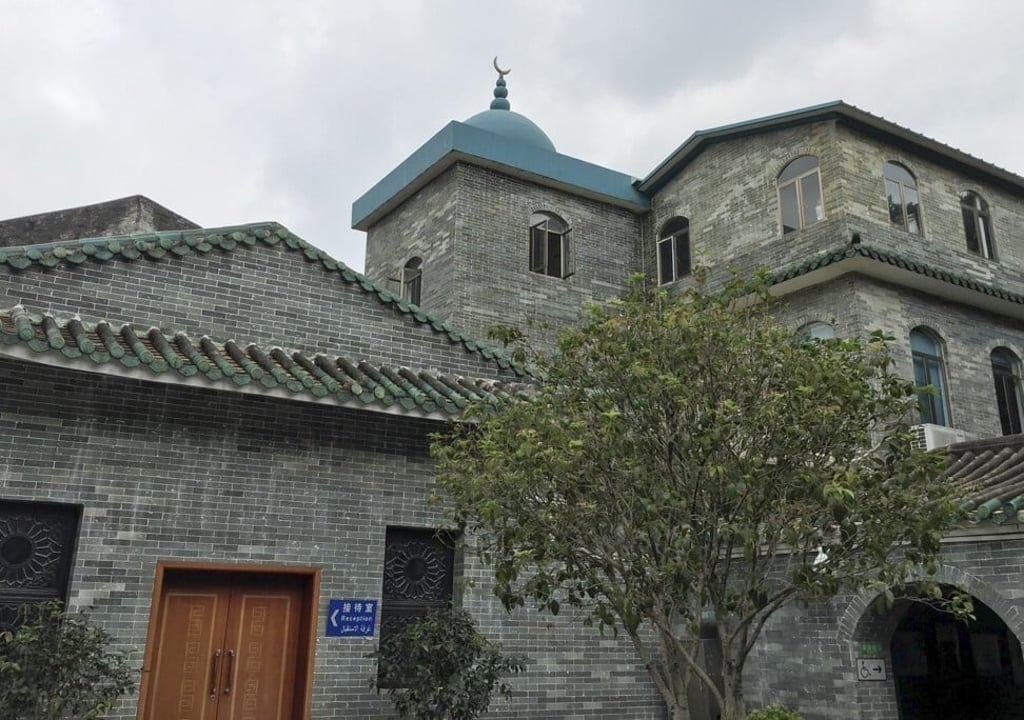
Huaisheng Mosque, in Guangzhou. Photo: Shutterstock
Advertisement

In the subsequent centuries, Muslim traders continued to come to China and settle in major cities, in particular coastal trading hubs such as Guangzhou, Quanzhou, Hangzhou, and so on, where their numbers were sufficiently large to build and maintain mosques, and even Muslim cemeteries.

Advertisement
Select Voice
Choose your listening speed
Get through articles 2x faster
1.25x
250 WPM
Slow
Average
Fast
1.25x