Then & NowSoap was once the great hygiene divider, how times have changed
- The source of much international mirth, soap has evolved a great deal since the mid-19th century carbolic blocks became broadly available
- Formerly expensive shower gels and liquid shampoos are now so ubiquitous that some are unfamiliar with bar soap

The mid-19th century’s dawn of the “carbolic age” marked a major developmental divide, between those regions that had soap – and used it – and those that did not. It used to be said, with some truth, that the main difference between Europe and North America were standards of personal cleanliness; wry remarks about a “French wash” – a quick squirt of cologne, followed by a dusting of talcum – are the stuff of legend.
Likewise, the venerable Australian crack that the safest place to hide money in Britain was under the nearest bar of soap, said much about different personal hygiene perceptions. “Nothing impresses me more in American civilisation,” wrote philosopher and humorist Lin Yutang in Between Tears and Laughter (1943) “than the fact that soap here is good and cheap and available to all. Soap has become democratic.”
Hong Kong has manufactured various grades of soap since the 1860s, when German enterprise Friedrich Schwarzkopf and Company had a soap and soda ash factory at Shau Kei Wan. The firm later Anglicised its name to Blackhead and Co, and continued to operate until World War I.
Famed for its Two Girls brand of perfumed soap, as well as cologne, hair oil and talcum powder in the same scent, Kwong Sang Hong has been in operation since 1898. Various other local brands came and went over time.
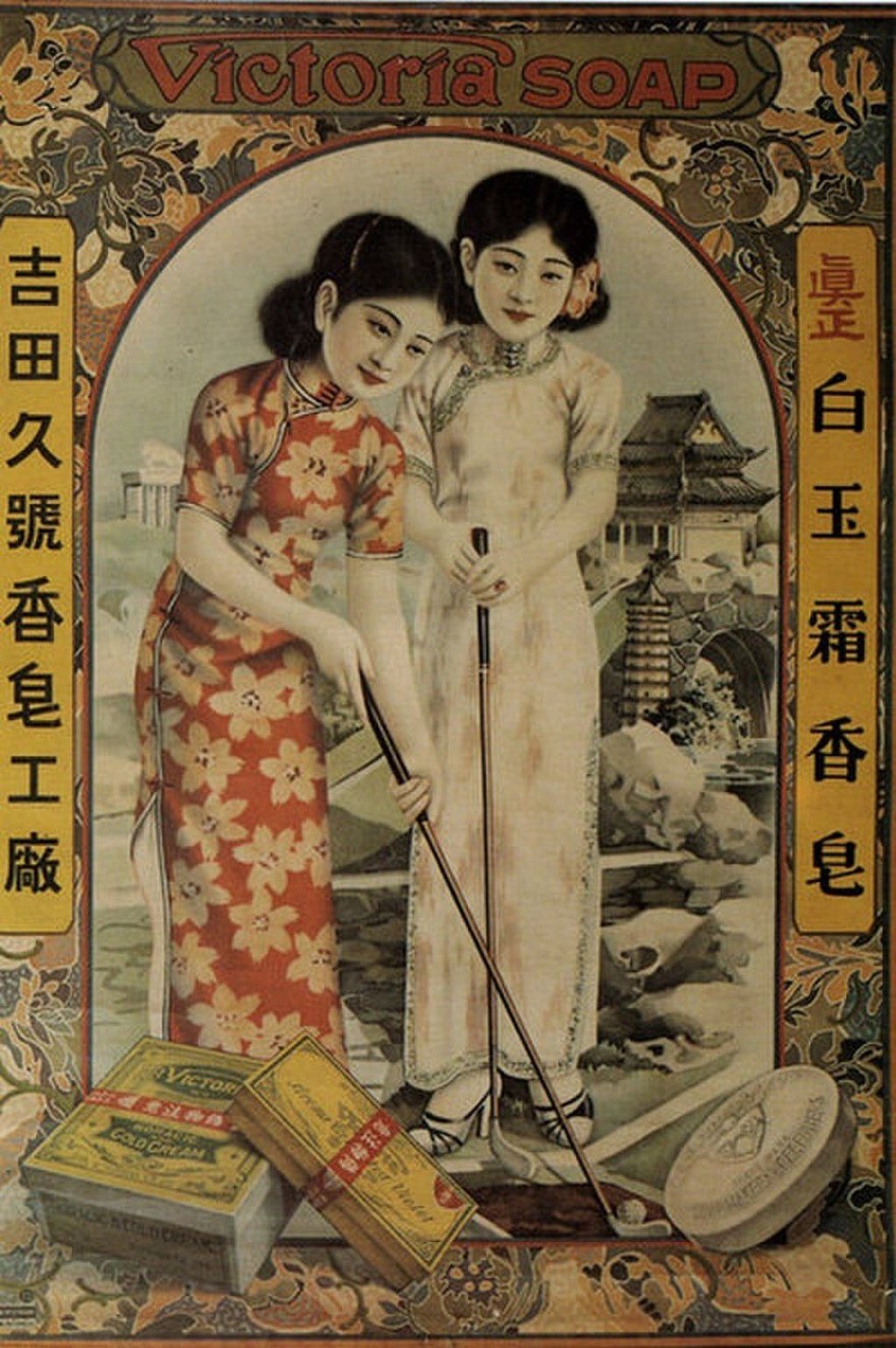
Overseas Chinese returnees to China between the 1950s and 80s often remarked on the difficulty of obtaining good-quality soap during those years. This contrasted sharply with their former homes in Southeast Asia, where even the poorest inhabitants liberally used locally produced, inexpensive brands.