ReflectionsChinese matchmaking and arranged marriages in imperial China – for love and money
- Marriages among the wealthy were less about a union between two young people than an alliance between families
- Today, matchmakers help to coordinate rituals at traditional wedding ceremonies – in return for a fat fee

The Netflix documentary series Indian Matchmaking has cast a spotlight on the marriage industry on the subcontinent, where parents still employ professional matchmakers to find spouses for their children.
Matchmaking isn’t a relic of the past; millions of men and women worldwide seek the help of go-betweens to find their life partners, from multinational matchmaking agencies such as Lunch Actually and Hong Kong’s very own Mei Ling (who found fame on the 2012 TVB reality show Bride Wannabes), to dating apps such as Tinder and OkCupid.
My parents had a “love marriage”, but not before my mother’s family tried to arrange unions for her, with an in-law’s relative twice her age, and with a son of her father’s business associate. Both ventures were unsuccessful, due in part to my mother’s refusal to go along with “old-fashioned” arranged marriages, and my father’s determined courting.
He even staged a one-man sit-in at my Cantonese grandfather’s shop, in Singapore’s Bugis district, to protest the latter’s disapproval of his daughter’s relationship with a Peranakan-Hokkien man. My parents will celebrate their 55th wedding anniversary next January.
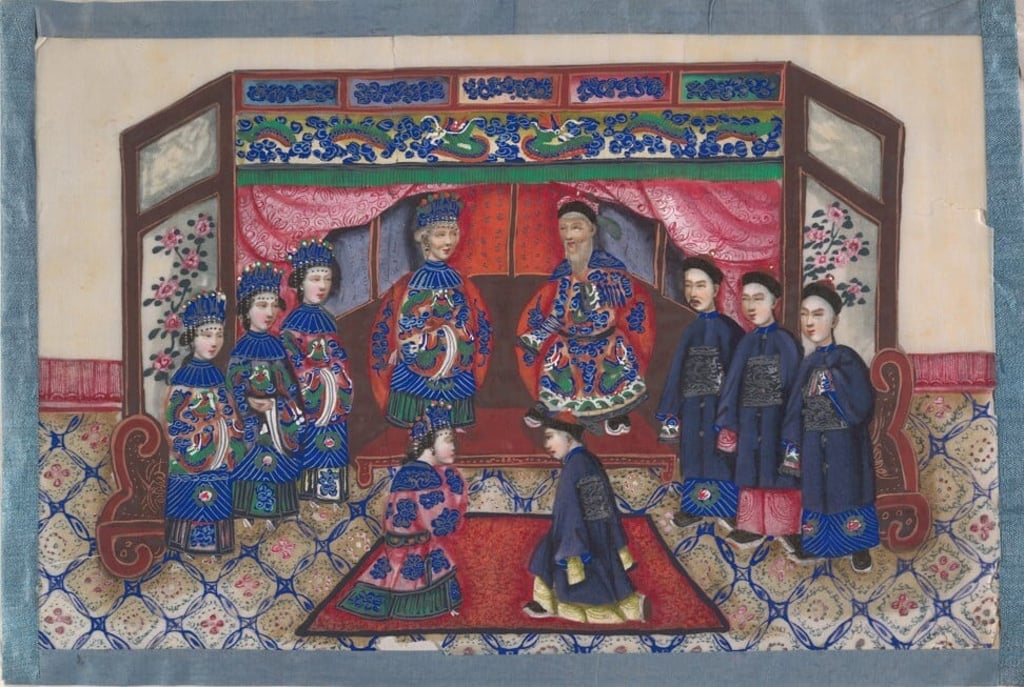
Permission from parents or elders, and the work done by go-betweens, were essential components of legitimate marriages for much of pre-20th century China. A contemporary elucidation of this practise, and its justification for centuries afterwards, is found in the writings of Chinese philosopher Mengzi, or Mencius (372BC-289BC): “If the young people, without waiting for the orders of their parents, and the arrangements of the go-betweens, shall bore holes to steal a sight of each other, or get over the wall to be with each other, then their parents and all other people will despise them.”