Language MattersHow 15th-century King Sejong the Great helped make Korea literate
- Logical and easily learned, Hangul was just one of many accomplishments of the monarch
- Adopted centuries after it was created, the language helped Korea achieve almost 100 per cent literacy
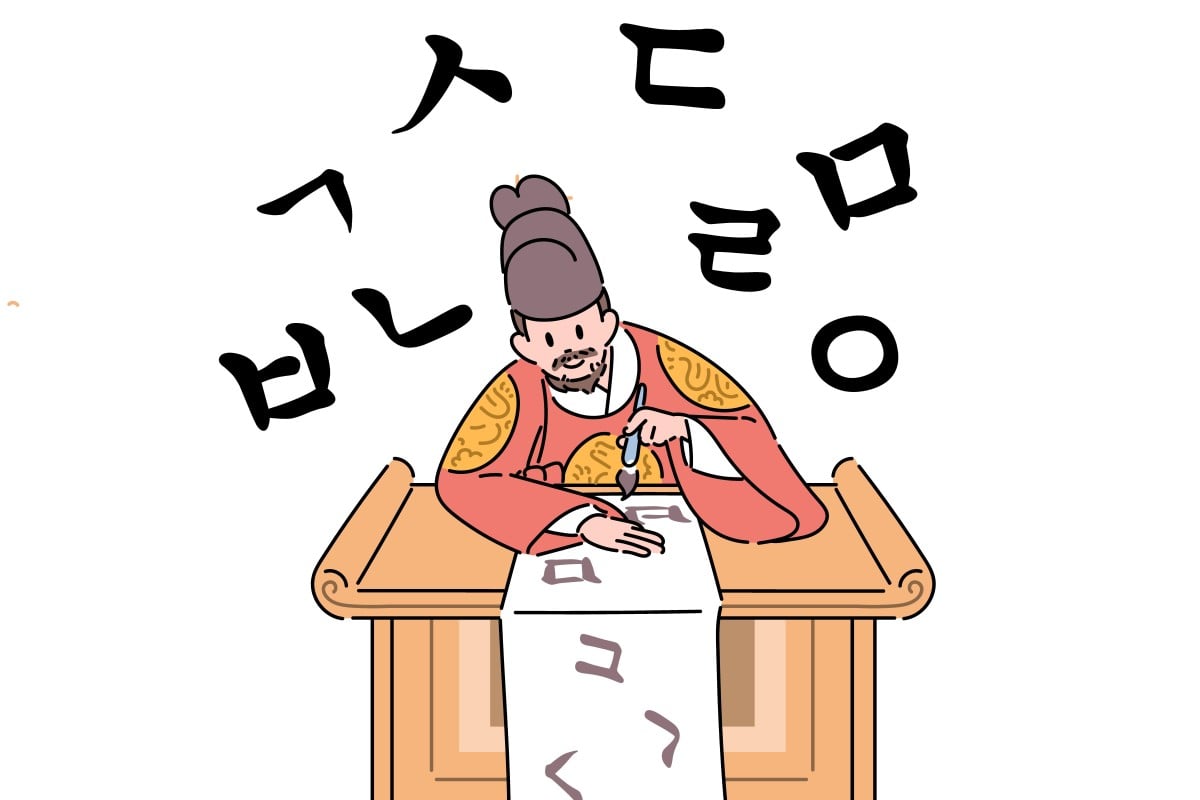
October 9 is Hangul Day in South Korea, celebrating the Korean language script, while North Korea similarly marks Choson’gul Day on January 15 – the world’s only national holidays for a script. With han interpreted as “great, unique”, Hangul “script of Korea” also means “great script” – rightfully so regarded for both linguistic and social reasons.
Before Hangul’s introduction, in 1446, the sole means of rendering written Korean was with Hanja, the writing system comprising primarily traditional Chinese characters introduced around the 1st century BC. Use of Hanja was the prerogative of scholars, the wealthy and the upper class, most of the population having little or no access to such classical education and literacy.
Enter King Sejong the Great (reigned 1418-1450) of the Joseon dynasty, venerated for his achievements in improving the lives of the common people. In his support for localisation – including developing a Korean agricultural calendar and medical encyclopaedia of native herbs and remedies – he recognised the challenge that widespread illiteracy presented to disseminating local knowledge.
This prompted his development of a logical, easily learned system accurately representing the Korean language, initially named Hunminjeongeum, “The Correct Sounds for the Instruction of the People”.
Based on alphabetic and phonemic principles, Hangul’s letter design was deliberate. Consonant shapes correspond to speech organs’ positions during articulation: for example, the basic letter for “n” is ㄴ, the side view of a person’s tongue tip raised to touch the alveolar ridge. Vowels have three elementary shapes (representing heaven, Earth and man). Additional strokes and diacritics allow for variations on the basic forms.
Consonant-vowel sequences then combine in a block for each syllable, such that visual representation and processing are syllable-oriented. In the first syllable of Hangul, the sounds “h”, “a” and “n” are represented by letters ㅎ, ㅏ, and ㄴ. These are not represented sequentially, but arranged in the appropriate pattern for a block, in this case, with the first two letters next to each other, and the third below: 한.