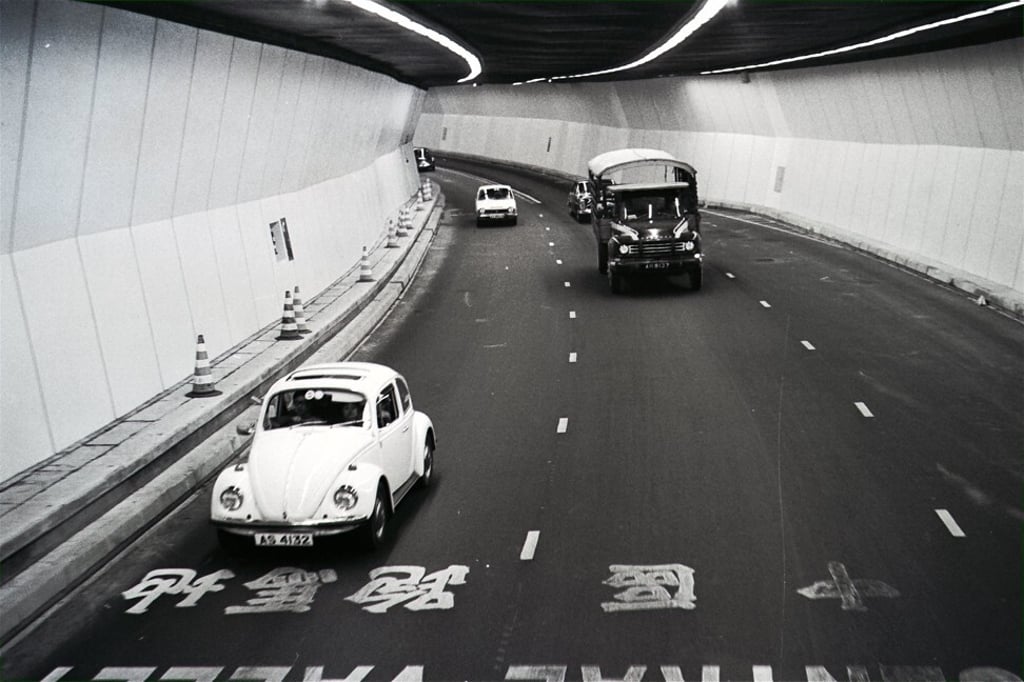
Then & NowThe great divide: Hong Kong’s harbour has long set the boundary for a tale of two cities
- Tired tropes about ‘The Dark Side’ and ‘crossing the seas’ persist despite quick and easy transport routes
- Distinctions between both sides have always said more about mentalities than geographic distance

From its urban beginnings, Hong Kong was a Tale of Two Cities, symbolically divided – geographically, socially and, to an extent, economically – by Victoria Harbour. Whether one hailed from “Hong Kong side” or “Kowloon side” significantly shaped how one lived one’s life. “Are you married, or do you live in Kowloon?” is a question said to have often been directed at young European males by established residents. Like any urban myth, this time-worn period memoir standard has been endlessly regurgitated.
As with everything in Hong Kong, parallel lives existed, and it was not unknown for lifelong residents to go many years without crossing to the other side of the harbour. This geographical bifurcation remains largely in place today; for plenty of Hong Kong Island dwellers, Kowloon is just somewhere to pass through as quickly as possible on the way to and from the airport.
Certain types of resident Westerner habitually refer to Kowloon as “The Dark Side” – whatever this dopey-sounding cliché is purported to mean – and tediously repeat the tired label to newcomers. Cantonese slang reinforces this ignorant view – “crossing the seas” refers to going under the harbour; a telling metaphor for attitudes to place.
Much the same bias applies to residents from the other side of the harbour. Insular mentalities had some basis when islands really were just that, but the mindset is inexplicable – actually, inexcusable – in the days of multiple cross-harbour tunnels, MTR lines and thundering expressways that swiftly and efficiently channel commuters in every direction, right across Hong Kong, all day and most of the night.