
ReflectionsPlants are not just for the pandemic, the Chinese have admired them for millennia
- The proliferation of house plants during the pandemic has been one of its happier consequences
- The oldest collection of Chinese poetry, the Shijing, contains an abundance of plant life

One of the consequences of social isolation over the past year, apart from corpulence and pallid complexions, has been the proliferation of house plants. With more time at home and the convenience of having seedlings, saplings and gardening kits delivered to their doors, a few enthusiasts I know seemed determined to turn their flats into luxuriant jungles or bountiful farms.
The ability to coax life out of plants, also known as having a green thumb, has always eluded me. I do enjoy them – I am curiously partial to chrysanthemums – but place a plant in my hands and its death inevitably follows. Not even the hardiest specimens are spared my unintentional planticide.
Professional and amateur horticulturalists alike may be interested to know that the oldest collection of Chinese poetry, the Shijing (Classic of Poetry and Book of Songs are among its multiple titles in English translation), contains an abundance of plant life. Almost half of its 305 poems and songs, dating from the 11th to the 6th century BC, feature vegetation of some kind, which are employed as poetic devices or simply to set the scene.
Plants are found in happy, upbeat songs: “There is a lady in the carriage with him / With a face like the flower of the shun. / As they move about / The gems of her belt-pendant appear. / That beautiful eldest Jiang / Is truly admirable and elegant. / There is a lady walking with him / With a face like the blossoms of the shun / As they move about / The gems of her belt-pendant tinkle. / That beautiful eldest Jiang / Whose virtuous fame is not to be forgotten.”
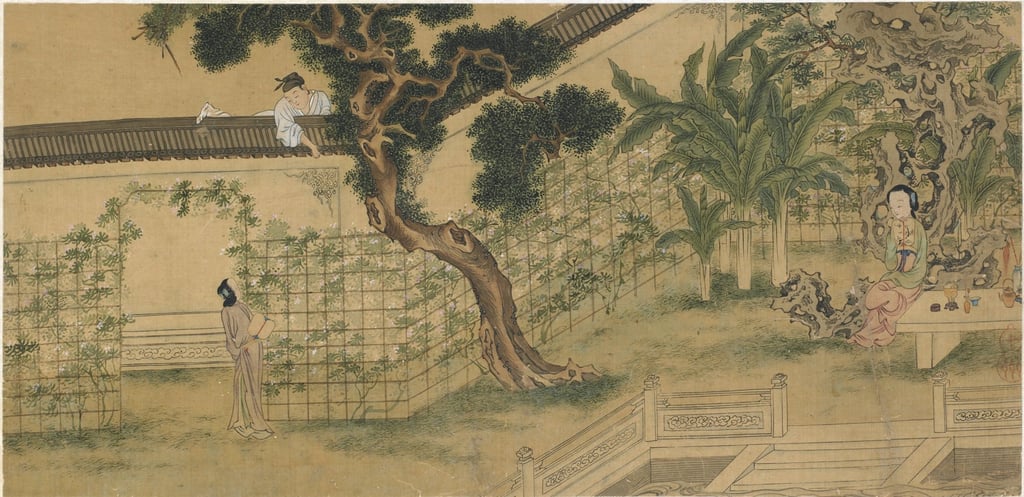
This song about the courtship of a pair of aristocratic youths compares the lady’s face to the flower of the shun, or hibiscus plant, whose exuberant beauty has long been celebrated, and is now the national flower of nations as diverse countries as Haiti, Malaysia, Niue, the Solomon Islands and South Korea. It is also the state flower of Hawaii and closely associated with the tropical Japanese prefecture of Okinawa.