
ReflectionsThe Aukus alliance: what ancient China’s Warring States period tells us about the forces in play and their possible fates
- A nominal overlord, a rising power and six states caught in-between and alternately united and divided over how to prevail against the latter – sound familiar?
- China’s Warring States period, which ended with the rising Qin state conquering all to unite the country, says much about the play of shifting alliances

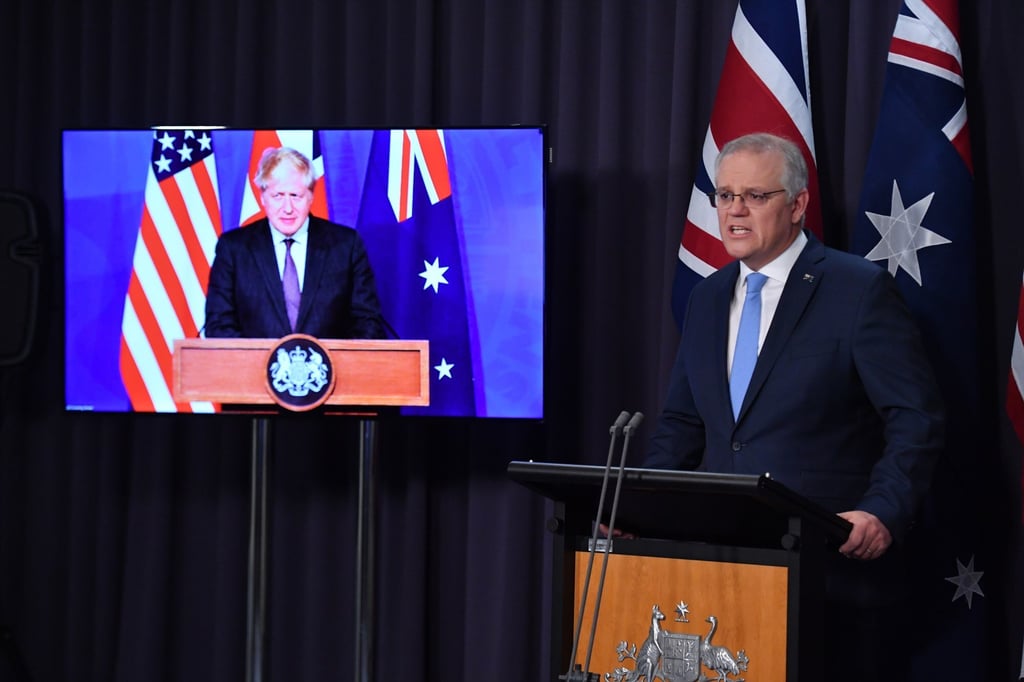
Australia, the United Kingdom and the United States announced in mid-September that they had formed a military alliance in response to growing concerns over regional security in Asia.
Near the end of the Warring States period (475–221BC), when the nascent Chinese nation was a fractious collection of seven major states, military alliances between them were very much a part of political life.
The “international situation” in northern and central China at that time was dominated by concerns over the growing power of the state of Qin in the west. The traditionally strong states of Qi in the east and Chu in the south were no match for the Qin armies. The rest – Han, Zhao, Wei and Yan – were huddling in the middle trying not to get in anybody’s crosshairs.
The ancient royal house of the Zhou dynasty, the nominal overlord of all the states for over seven centuries, survived in a tiny parcel of land around Luoyang in central China, left alone because of its irrelevance and insignificance.
There were two main types of alliances during the period. The first one was called “perpendicular coalitions” (hezong), which involved several or all of the six states allying themselves against Qin. There were four such coalitions in the 77 years between 318 and 241BC and four wars were fought between the hezong states and Qin, with an equal number of victories and losses on both sides.