
Advertisement
PostMag
Life.Culture.Discovery.
Lessons from China's history
MagazinesPostMag
Wee Kek Koon

ReflectionsAll through Chinese history its global cities’ fortunes have waxed and waned – people in Hong Kong should relax and accept a change in its status

  • Throughout Chinese history various cities have attracted foreign residents, only for their fortunes to wane. Look at Chang’an (now Xian), Quanzhou and Guangzhou
  • It may be distressing to live through such a decline, but there’s nothing to worry about – there will still be bread to be won and dim sum to be had

3-MIN READ3-MIN
43
Statues on Shamian Island, a heritage district of Guangzhou that was the site of British and French concessions in the 19th century. It is one of many cities in China that at one time drew foreign residents, all of whom have now gone. If the same happened to Hong Kong, it would just be history repeating itself. Photo: Edward Wong

There has been much wringing of hands in Hong Kong over the diminishing of the Special Administrative Region’s status as an international city.
The National Security Law, in place since the middle of 2020, is supposed to have triggered an exodus among Hong Kong’s residents, both foreign and locally born, and discouraged the influx of corporations and their staff from Western countries.
This is exacerbated by the Hong Kong government’s zeal in keeping the city hermetically sealed in pursuit of its zero-Covid strategy.
Advertisement
So far, most of the evidence indicating Hong Kong’s transition from “Asia’s world city” to “just another Chinese city” has been anecdotal. Even if it is true, Hong Kong is hardly the only city in China, or in the world for that matter, to go through the process of losing its international flavour, redirecting its focus inward and becoming part of the hinterland.
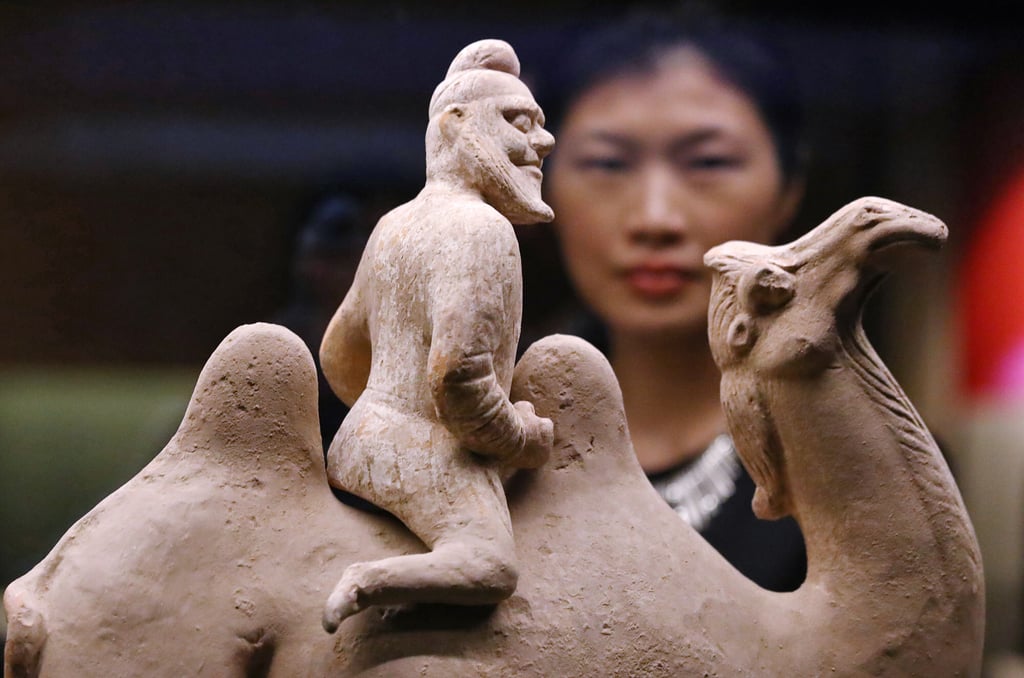
A camel with Central Asian rider is the subject of this pottery piece from China’s Tang dynasty. The Tang capital, Chang’an, welcomed foreigners from across Asia until the 9th century. Today it is a second-tier city, Xian. Photo: Nora Tam

Chang’an, the capital of the Chinese empire during the Tang dynasty (618–907), was one of the most cosmopolitan cities in the ancient world. The neighbourhood of Chang’an had been the site of dynastic capitals long before the Tang. However, the Tang’s military might and cultural power, the dynasty’s own cosmopolitan outlook – its emperors had Central Asian ancestries – and the city’s location at the eastern terminus of the overland Silk Road meant that Chang’an attracted substantial numbers of foreigners as traders, sojourners and permanent settlers, enough to be worthy of note in contemporary records written by historians, men of letters and foreign visitors.

Advertisement

Chang’an hosted foreigners from west of China such as Persians, Arabs, Turks, the various Central Asian peoples. From the east, Japanese and Koreans studied in the city’s schools and universities, and a few of them even served in the Chinese government.

Advertisement
Select Voice
Select Speed
1.00x