Then & NowWhy Hong Kong’s current leaders are a cartoonist’s nightmare – there’s nothing recognisable about them
- Political cartoonists of old, such as David Low, didn’t lack for inspiration, from Hitler with his moustache to Hideki Tojo with his bottle-thick eyeglasses
- Even in Hong Kong we had “Silly Old Tung” and “Bow-Tie” Donald Tsang – but look at today’s public figures and they are too pedestrian to parody

Present times – it is almost a truism to relate – closely resemble the 1930s. Social and political polarisation, evermore fractious international tension, reassembling of strategic alliances, rapid rearmament, the general sense of sleepwalking towards catastrophic conflict – all these factors are depressingly present.
In particular the “Thoughts” of various supremos give frighteningly clear advance warning of their future intentions. Mein Kampf (1925) was dismissed as the paranoid rantings of a political extremist, until the author – Adolf Hitler – assumed power in 1933 and immediately started transforming words into deeds. The incredible rapidly became terrifying.
But one notable feature from that period is markedly absent: first-rate cartoonists – such as New Zealander David Low – who could accurately capture the spirit of time and place, and properly skewer the pretensions of the era’s leading figures.
Benito Mussolini’s corpulent bulk corseted into Ruritanian uniforms and comic-opera headgear; Hitler ranting and frothing behind the toothbrush moustache; Joseph Stalin looming like a primitive Slavic bear that had somehow wandered into civilisation from the remote Siberian steppes and taken over the place; Hideki Tojo peering like an angry simian through bottle-thick spectacles – all these became stock figures of political satire.
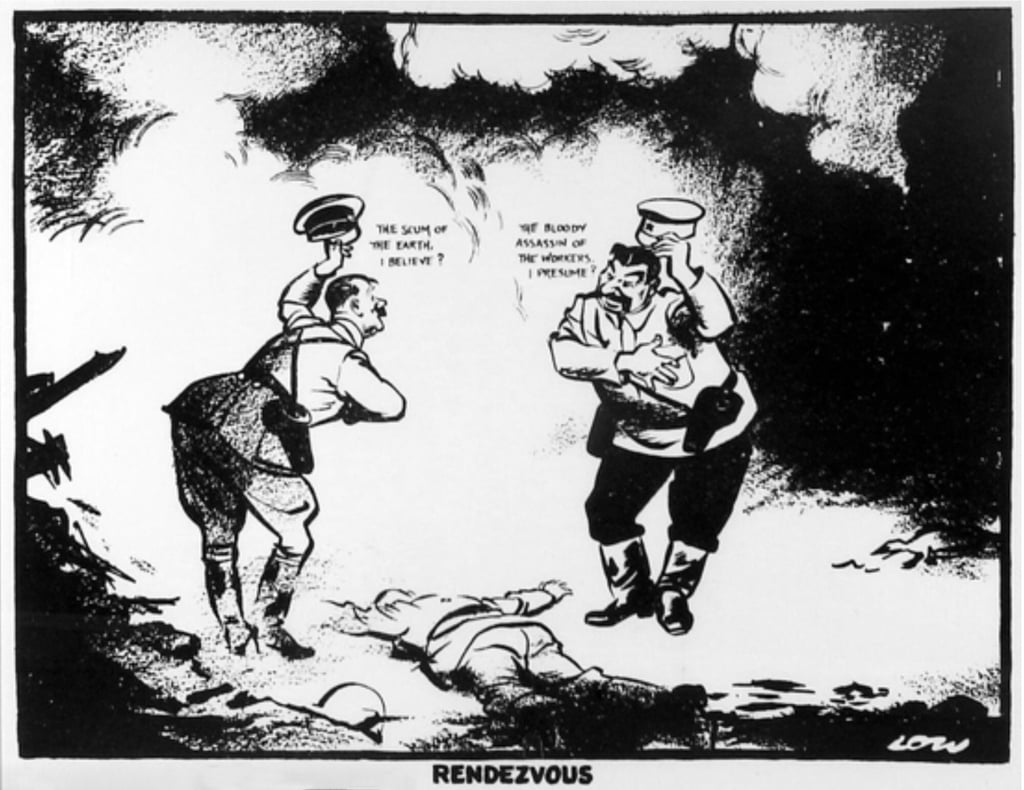
At least the Gestapo showed some sartorial style; let it not be forgotten that Hugo Boss – no less – designed their uniforms. Brutal viciousness didn’t materially alter their essential ridiculousness. And because these monsters took themselves so seriously, pretension’s balloon popped even louder when someone gleefully took a pin to it.
Seen from historical distance, these long-dead monsters don’t always appear as ghastly as they really were. Surely – some revisionists think – journalistic hyperbole has been slavishly deployed to make the point. But no, observe them, and the sycophantic minions who jostle to be around what Henry Kissinger described as the ultimate aphrodisiac – power – up close, and they really were what, in our hearts, we know them to be: appalling, petty and bullying, meriting equal measures of pity and contempt.