ReflectionsLike Angela Rayner, Chinese women politicians have endured puerile and sexist comments
- British tabloid The Mail’s recent insolent attack on the UK Labour Party’s Rayner reminds of a letter Empress Lü received from an impertinent neighbouring ruler
- Lü realised that an attack from China was what the ruler wanted and used wise restraint to ensure peace while the country built up its strength internally

British tabloid newspaper The Mail on Sunday published a story on April 24 that was so offensive in its misogyny, and so puerile in its lewdness, that you would be forgiven for thinking the editors and writers, and MPs who fed them this story, are a gaggle of pubescent, knuckle-dragging Neanderthals.
The paper reported that Angela Rayner, deputy leader of the Labour Party, crossed and uncrossed her legs in the House of Commons to distract British Prime Minister Boris Johnson, quoting a source from the ruling Conservative Party as saying that Raynor deployed “a fully-clothed parliamentary equivalent of Sharon Stone’s infamous scene in the 1992 film Basic Instinct”, adding, “She knows she can’t compete with Boris’ Oxford Union debating training, but she has other skills which he lacks.”

Politicians from both the left and right in the United Kingdom have condemned the news story, but this is merely the latest in a long line of sexist and patronising comments and behaviour that women politicians have had to endure, not only in Britain but many parts of the world.
When Emperor Gaozu, founding emperor of the Han dynasty, died in 195BC, his widow, Empress Lü, took over the reins of government. North of China was the Xiongnu empire, whose ruler, Modu, was eyeing the lands to the south. To this end, Modu wrote the recently widowed Lü a letter, whose insolence was designed to provoke a response.
“I, a solitary ruler, was born in the swamps,” Modu’s missive began, “and grew up in the steppes overrun with cattle and horses. Having gone to our frontiers several times, I wish to travel in the Middle Kingdom. Your Majesty is lonesome, living alone in solitude. We are two unhappy rulers who have nothing with which to entertain ourselves. I am willing to give what I have, in exchange for that which you lack.”
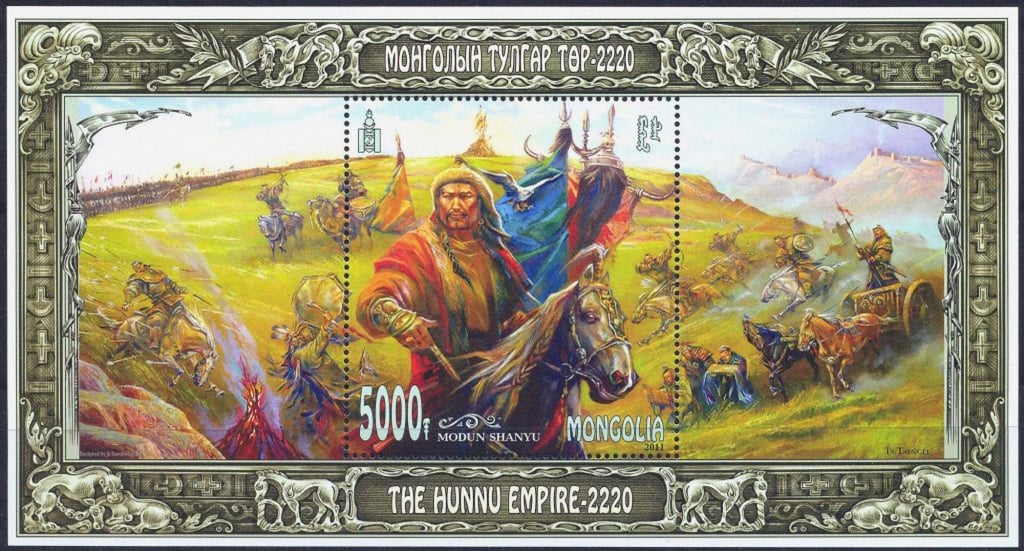
The impertinence of Modu’s letter is palpable even when it is read today, more than two millennia after it was written. The military commanders of the Han dynasty were understandably livid because an insult heaped upon one’s late emperor and widowed empress was akin to a personal affront. A few of them offered to lead armies to fight Modu and his Xiongnu empire.