ReflectionsForget being ‘Fujian people’ or Cantonese – we in Southeast Asian diaspora should see ourselves as citizens who happen to be of Chinese ancestry
- Southern Fujian was historically one of China’s most outward-looking places, and most ethnic Chinese in Southeast Asian countries trace their ancestry to Fujian
- However, after generations of intermarriage it is to be hoped ethnic Chinese identify as citizens of those countries, not as Fujian people, Cantonese or Teochew

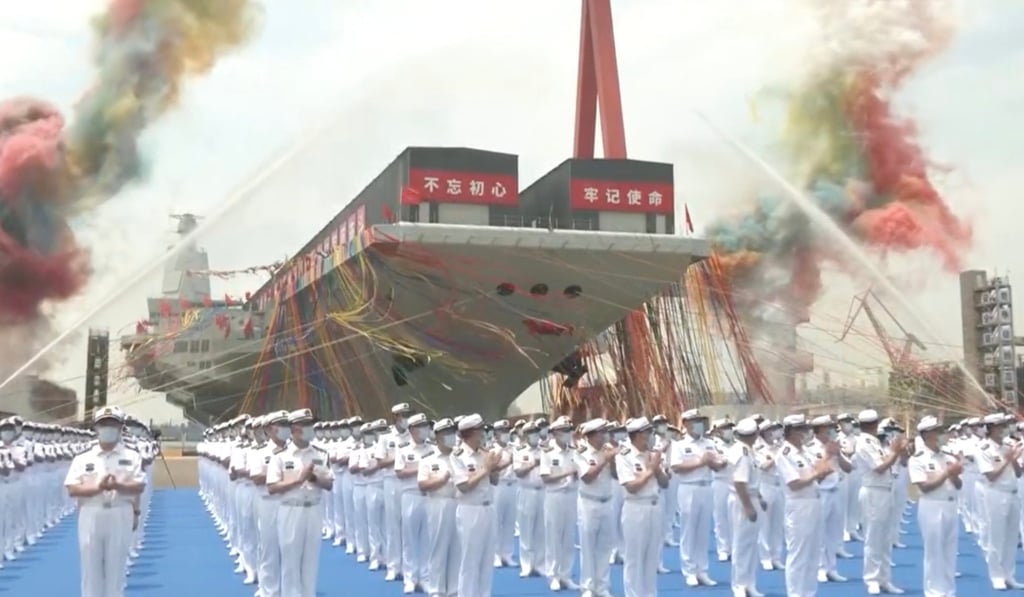
In June, the Chinese navy launched its third (and first locally designed) aircraft carrier, Fujian, as part of the country’s drive to modernise its military and reduce its dependence on foreign military suppliers. Some observers find it significant the vessel is named after the province that lies directly across the waters from the island of Taiwan.
Like other coastal provinces in southeast China, Fujian in ancient times was not part of the Chinese cultural heartland. Its natives were considered “barbarians” who “cut their hair and tattooed their bodies”.
When the Qin dynasty unified China in 221BC, this remote region was incorporated into the newly established empire as a local administrative division. However, its relationship to the central government was much like a vassal state, and it was left to its own devices.
Over time, with more centralised control of the empire’s far-flung areas, and more frequent movements of people between the interior and the region, it lost its autonomy and peripheral status, eventually becoming an inalienable part of the Chinese nation.
With mountains covering 90 per cent of its area, Fujian’s population had always been concentrated along its extensive coast. Linguistically and culturally, the coasts of the northeast (Mindong) and south (Minnan) are quite different.
The former is centred in the provincial capital, Fuzhou; the latter the port city of Xiamen. The Mindong and Minnan (also called Hokkien) dialects, and their sub-variants, are mutually unintelligible.