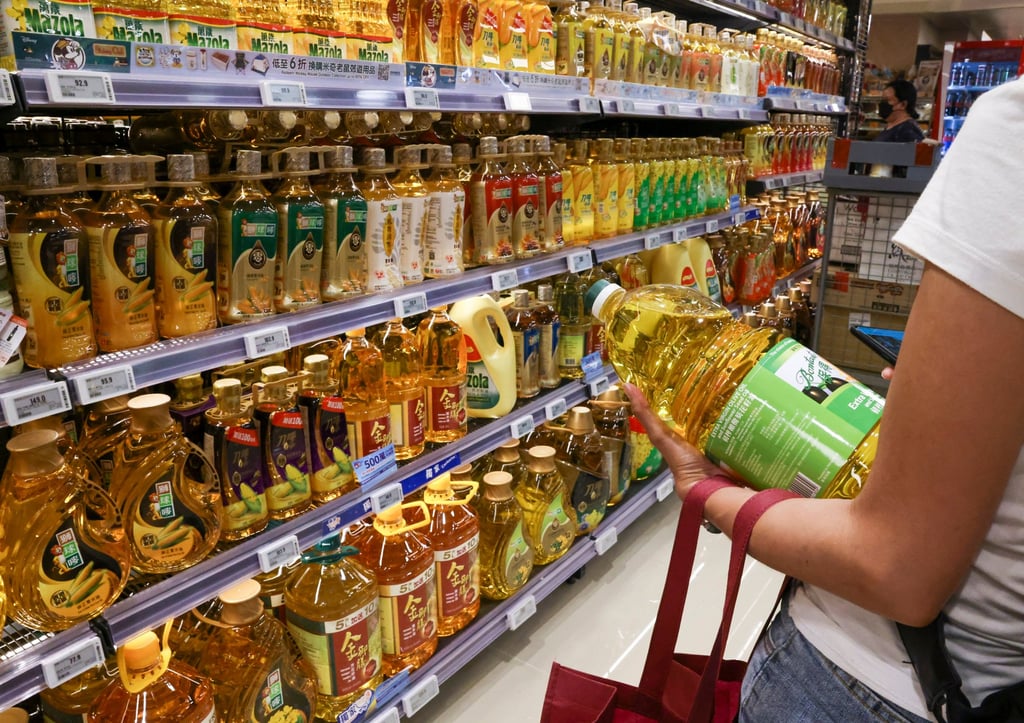
Then & Now | From lard to butter, ghee, olive oil and palm oil, how Hong Kong cooks’ tastes for edible fats have evolved
- ‘Wife cakes’ and mooncakes wouldn’t be the same without lashings of lard, but Hong Kong cooks have moved on to using other fats for many Cantonese dishes
- Butter and clarified butter, or ghee, were never popular in Chinese kitchens, but palm oil and healthier rapeseed and olive oil have all been adopted

Cantonese food is distinguished by three factors: freshness, sweetness and oiliness – to many palates, oiliness predominates. A wide variety of edible fats are consumed in Hong Kong, but peanut oil – along with rendered pork lard – remain firm favourites among more traditionally minded cooks.
Peanut oil adds a distinctive, immediately recognisable taste to Cantonese food, and remains the local cooking oil of choice.
Native to Central and South America, the humble peanut (Arachis hypogaea) – also commonly known as the groundnut – was introduced, like many other now common foods such as watercress, aubergines, tomatoes, yams, sweetcorn, maize and papayas, into maritime Asia in the 16th and 17th centuries through Manila, and Macau and Amoy (modern Xiamen).
Cultivation then spread into mainland China. Peanuts thrive in cool, dry climates; while extensively grown in northern China, most of modern Hong Kong’s peanut oil comes from Australia, the United States and South America.