The good, bad and ugly sides to Burning Man gathering
Music, hugs and love abound in a remote patch of the Nevada desert each year – just don’t call it a festival

THE GOOD
40°45’13.83”N, 119°16’37.20”W.
With the possible exception of a holographic spandex jumpsuit, few things are more essential for anyone venturing into the featureless Black Rock Desert in Nevada for Burning Man 2017 than the GPS coordinates. The summer shindig, which started in 1986 as a low-key San Francisco beach party attended by about 20 free spirits, has become a counterculture juggernaut, drawing “Burners” from every corner of the planet.
This year, the arts gathering (don’t call it a festival, there’s no scheduled entertainment) runs from August 27 to September 4 and will culminate, as always, with the ritual burning of a giant wooden effigy of a man. Well, not quite always. In 1989, wildfires in California meant police were suspicious of anyone purposely setting things ablaze on beaches, or anywhere else, and so the figure remained unburnt. The search for a new site began and, a year later, about 80 believers made their way to remote Black Rock Desert for the inaugural Nevada Burning Man.
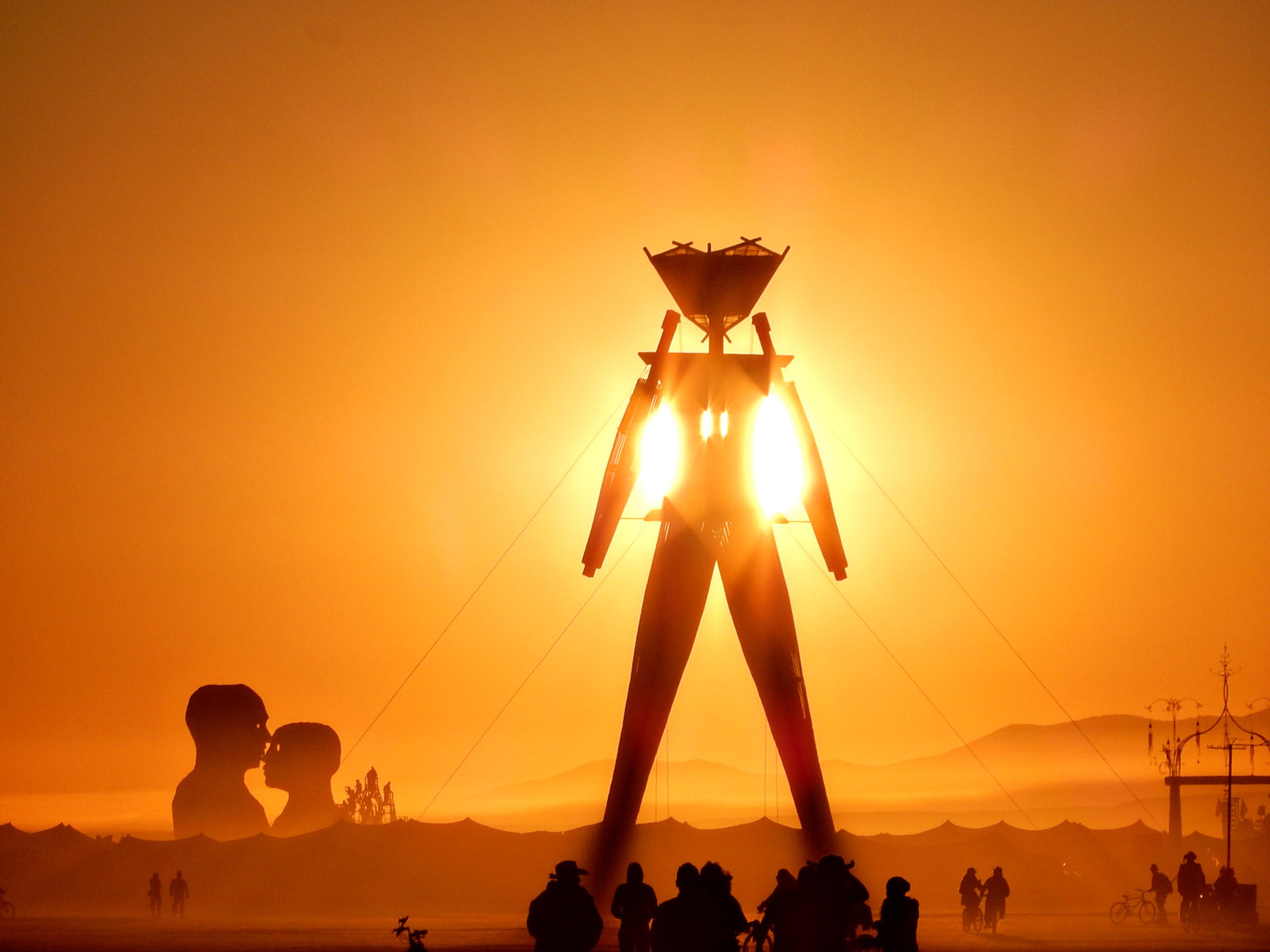
Next week, about 70,000 people will set their satnavs and head into the middle of nowhere in cars, motorhomes and heavily customised mutant vehicles. Some will book flights with Burner Express Air, landing at Black Rock City Municipal Airport, which doesn’t exist for the other 51 weeks of the year. An assortment of New Agers, enlightenment seekers and weekend warriors (regular 9-5ers) follow directions to a horseshoe-shaped collection of tents and mobile homes built on a huge salt pan, an area of hard, cracked clay, known as the playa. For a few days, the temporary settlement becomes one of Nevada’s largest cities.