Belarus: a true taste of Soviet life but with all the mod cons
The landlocked country in Eastern Europe has weathered the storms of war and now offers a taste of true Soviet life, albeit with the modern advantages of widespread Wi-fi access to an unfettered internet

A small ex-Soviet republic sandwiched between Russia and Poland, if ever a country were a victim of geography then Belarus is it. Invaded by many an army on the way to somewhere else, the capital, Minsk, was shattered during the second world war, with barely a building left standing. Germany destroyed 209 of the 290 towns and cities in the republic in four years of war and 25 per cent of the nation’s population perished.
However, this being a city of wide boulevards and grand Stalinist architecture, the size and ambition of Minsk’s post-war rebirth – from the main square, with its rebuilt red-brick church and university, along Independence Avenue to the broad curve of the Svislach River and Gorky Park – cannot fail to impress.
Impressive, too, is the continued Soviet influence. President Alexander Lukashenko has been in control in Belarus since 1994 and runs a tight dictatorial ship. “Europe’s last dictator”, as former United States president George W. Bush once called him, has openly stated his support for Soviet values and a single-party state, and voiced his determination to serve his country “until the last of my days”.
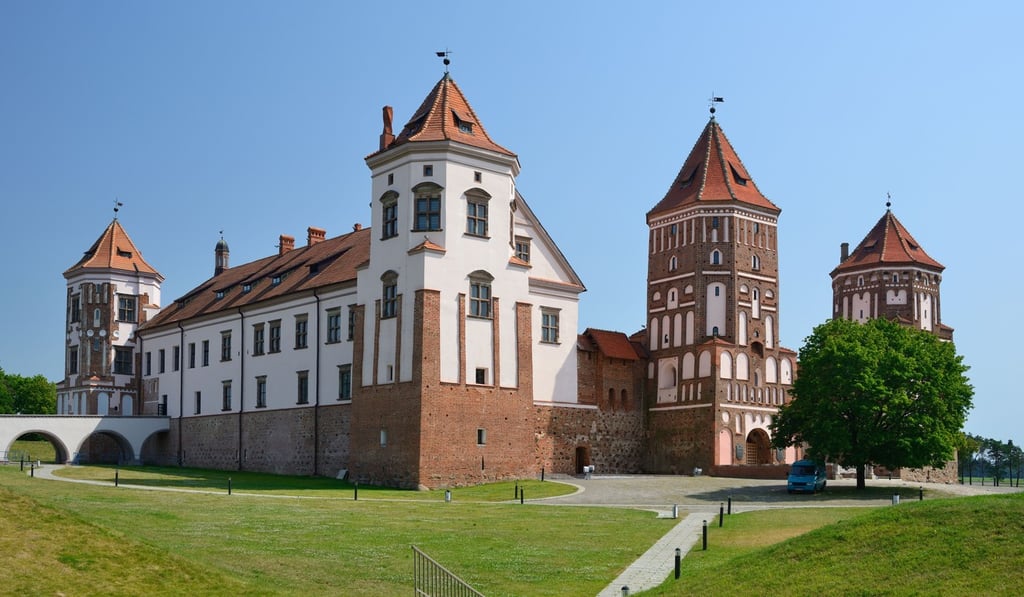
Perhaps unsurprisingly, then, Minsk feels like it’s still in the grip of the cold war: an imposing statue of Lenin in the square; a massive KGB headquarters with its columns and flags in the city centre; and museums and monuments commemorating victory over “fascists and imperialists”. But it’s a surprisingly modern and European city, too; the internet is unrestricted, Wi-fi is ubiquitous and people are free to travel.
Among the pavement eateries and bars serving Belarus beer and draniki potato pancakes with sour cream is the Staroe Vremya cafe, a tongue-in-cheek homage to the Soviet era. Customers sit in comfortable armchairs at dark wooden tables, some next to a candle shaped like Stalin’s head, consuming “Khruschev salad”, “Kremlin fish cakes” and “Yuri Gagarin milk shakes” while the band plays traditional music beneath a poster of Karl Marx.